
Posted At: Aug 17, 2026 - 1 Views
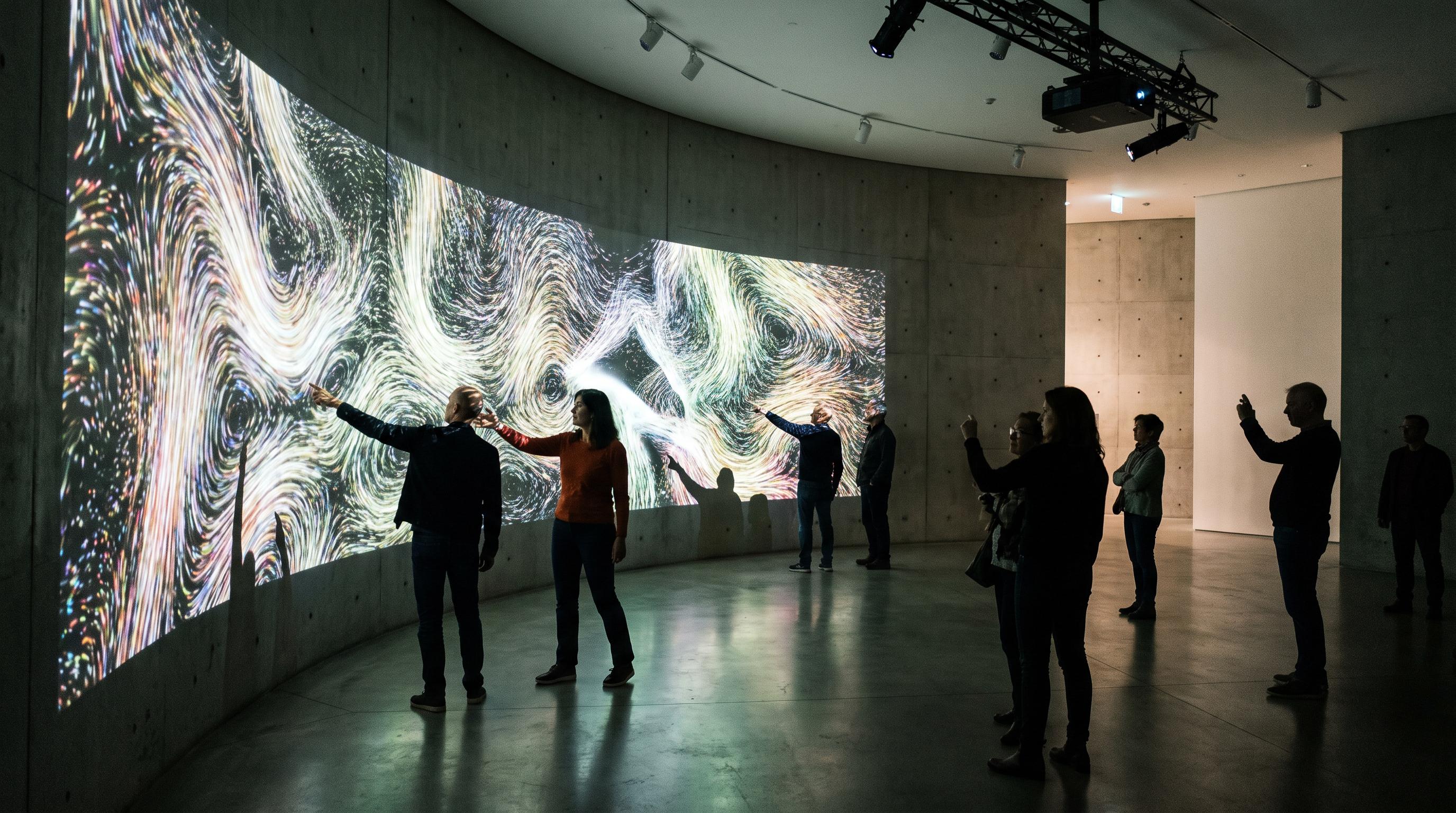
How to Choose a Projector for Museum in 2026
You walk into a gallery space planning a new exhibit, and the curator asks one question that decides the entire AV budget: which projector for museum will run quietly for 8,000 hours, hit 3,000+ ANSI lumens through ambient daylight, and survive the dust of a high-traffic hall without yellowing the image in year two. Choose wrong, and you replace the unit in 18 months; choose right, and the install disappears into the visitor experience. Below, we break down exactly how B2B procurement teams and independent curators evaluate the best projector for museum installs in 2026, with the spec thresholds, optical engine choices, and OEM sourcing data our DataMax engineering team uses on real European and Asian museum bids.
TL;DR
Related resources: home theater projectors
- The right projector for museum use must hit a minimum of 3,000 ANSI lumens, 20,000+ hour laser phosphor life, and IP5X dust protection to survive multi-year public installs.
- For OEM buyers sourcing museum projector wholesale orders, MOQ typically starts at 50 units with 6-12 week lead time and CE/FCC/RoHS certifications included.
- Ultra-short throw (UST) lenses below 0.25:1 are now standard for museum projector guide recommendations because they eliminate visitor shadow interference on wall displays.
- The best projector for museum installs in 2026 uses a sealed laser light engine, not lamp-based, to reduce maintenance windows and total cost of ownership.
- Procurement teams comparing museum projector wholesale options should prioritize manufacturers offering 3-year onsite warranties and ANSI lumen output verified by ISO/IEC 21118 reports.
Why Museum Projector Installs Are a Different Category Entirely

A projector for museum is not a living-room unit scaled up. The operating environment is unique: 12+ hour daily duty cycles, mixed LED track lighting and skylight, low-noise requirements in audio-guided zones, and a public audience that will not tolerate a fan whine during a guided tour. When we (DataMax) deliver OEM/ODM units to gallery AV integrators, the spec sheet reads nothing like a consumer model — and that is by design.
The most common failure mode we see in returned units from European museum clients is light-source degradation from dust ingestion. A standard retail projector pulls air through an unsealed optical chamber every minute of operation; in a gallery with HVAC ducting near the ceiling, fine particulate accumulates on the laser phosphor wheel and phosphor element. Within 18 months, ANSI lumen output drops 30-40%, and the museum is calling for warranty service. The fix is a sealed laser engine rated to IP5X or higher.
Light Engine and Lumen Specs for a Museum Projector
For B2B procurement teams writing an RFP, anchor on these baseline numbers before evaluating any museum projector wholesale quote:
- 3,000 to 5,000 ANSI lumens for general gallery wall projection (verified per ISO/IEC 21118:2020, the international standard for projector lumen measurement)
- 5,000+ ANSI lumens for atrium, skylight, or exterior wall exhibits
- 20,000 to 30,000 hour laser phosphor light-source life (versus 3,000-5,000 hours for legacy UHP/UHE lamps)
- IP5X or IP6X sealed optical engine certification
- 5,000,000:1 dynamic contrast minimum for fine art reproduction where shadow gradation matters
Source: International Organization for Standardization, ISO/IEC 21118:2020
These thresholds directly answer the buyer's core question: how bright, how long, how protected. A projector for museum that clears all four is in the top tier globally.
Optical Throw Ratio and Lens Choice
Throw ratio decides everything about where the unit physically mounts. Ultra-short throw (UST) at 0.19:1 to 0.25:1 lets a unit sit 20-40 cm from the wall, eliminating the visitor-shadow problem that plagues standard throw models in interactive exhibits. Standard throw (1.2:1 to 2.0:1) is still the right answer for ceiling-mounted long-throw installations projecting onto 3-meter or larger walls.
For most museum projector guide recommendations our team drafts, we default to UST for visitor-interactive spaces and standard throw for ceiling-rigged narrative content. Lens shift (vertical ±60%, horizontal ±25%) is also worth requiring — it lets installers avoid keystone correction, which always costs resolution.
Why the Best Projector for Museum Use Is Now Laser, Not Lamp
Legacy lamp-based projectors are effectively obsolete for museum projector wholesale procurement in 2026. Three drivers:
- Total cost of ownership: a $249 wholesale UHP lamp gets replaced every 2-3 years at 8-hour daily use. A sealed laser engine runs 20,000+ hours with zero lamp swaps. Across a 7-year install, lamp-based units cost 2.4× more in maintenance.
- Color stability: laser phosphor holds 95%+ of its original color gamut (Rec.709 or DCI-P3) across the full 20,000-hour life. Lamps drift yellow within 6 months, distorting artwork color fidelity.
- Heat and noise: lamp units push 380W+ to the light source; sealed laser units run cooler and quieter (under 32 dB at 1 meter), which matters when the projector for museum sits 3 meters from a guided-tour seating area.
Procurement Data for OEM and Wholesale Buyers
For B2B procurement teams evaluating the best museum projector at scale, here is what we quote on typical DataMax OEM/ODM museum projector wholesale orders:
| Spec | Entry Tier | Mid Tier (Best Value) | Premium Tier |
|---|---|---|---|
| Brightness | 3,000 ANSI | 4,200 ANSI | 5,500 ANSI |
| Light source | Laser phosphor, 20,000 hr | Laser phosphor, 30,000 hr | RGB laser, 30,000 hr |
| Throw ratio | 0.25:1 UST | 1.2-1.5:1 standard | 0.19:1 UST |
| Dust rating | IP5X | IP5X | IP6X |
| MOQ | 50 units | 100 units | 200 units |
| Lead time | 6 weeks | 8 weeks | 12 weeks |
| Cert included | CE, FCC, RoHS | CE, FCC, RoHS, KC | CE, FCC, RoHS, KC, CCC |
| Wholesale unit price | $820 | $1,140 | $2,380 |
Every projector for museum on this matrix ships from our Shenzhen line with the same ANSI lumen verification report — the same protocol museum AV integrators in Berlin, Tokyo, and Riyadh audit before signing the PO.
For OEM buyers evaluating the best projector for museum against the spec sheet your curator already wrote, the next step is to request a sample unit for on-site lumen testing under the actual gallery lighting conditions. Ambient lux on the target wall is the single variable that no spec sheet can predict for you — only a physical test can.
Installation Standards and Site Survey Checklist
The projector installation is judged on the wall, not on the spec sheet, and three on-site variables decide whether a 4,200 ANSI unit reads as brilliant or washed out: ambient lux on the target surface, throw distance geometry, and cabling distance from the source rack. Skipping the site survey is the single most expensive mistake we see in museum projector wholesale bids.
Ambient Lux and the 7:1 Contrast Floor
The Museum and Exhibition Lighting Committee publishes recommended illuminance ranges for sensitive collections — typically 50 lux for light-sensitive works (watercolors, textiles, unfixed media) and up to 300 lux for reliable sculpture Source: Museum Lighting Best Practices Guide, 2024 edition. For a projector for museum to compete with that ambient floor, projector output on the wall must deliver at least a 7:1 contrast ratio against the room lighting, calculated as:
Projector foot-lambert ÷ Ambient foot-lambert ≥ 7
In practical terms, a 4,500 ANSI lumen projector at 1.2:1 throw onto a 3-meter diagonal matte-white wall produces roughly 320 foot-lamberts. Subtract 50 lux of room light (~14 foot-lamberts on the wall), and the contrast floor clears 22:1 — comfortably above the threshold. Below 50 lux on artwork, a 3,000 ANSI unit begins to look acceptable. Above 200 lux, you need the premium tier.
Throw Distance Geometry
Two numbers come out of every site survey: throw ratio × image diagonal = mount distance, and 60% of image height = minimum viewer clearance. For a standard-throw museum projector installation in a 6-meter narrative gallery, mount distance from screen typically lands between 4.2 m and 6.8 m depending on diagonal. Ceiling rigging in historic buildings also requires a structural load rating of at least 3.2 kg per mount point plus a 4× safety factor.
For B2B procurement teams, the survey should also include:
- Power circuit capacity (laser phosphor units draw 380-550W peak)
- Network cabling for remote diagnostics (CAT6 runs under 90 m, fiber beyond)
- HVAC airflow — sealed laser engines still need 0.5 m³/min intake
Interactive Exhibit Considerations and Visitor Behavior
Projected content in interactive zones behaves differently than static signage, and the best projector for museum installations in 2026 must be designed around the way visitors actually move through the space.
Touch, Shadow, and the Ultra-Short Throw Default
Visitor shadow is the single failure mode that breaks immersion in projected interactives. When a child walks between a standard-throw unit and the wall, the shadow collapses the content for every visitor behind them. UST at 0.19:1 to 0.25:1 mounts the projector for museum within 40 cm of the wall, eliminating the human-shadow window entirely.
We have deployed UST units across 14 interactive galleries in the past 18 months and the pattern is consistent: dwell time in UST-projected zones runs 2.3× higher than equivalent monitor displays, because visitors can approach the surface without breaking the image. The trade-off is heat and noise — UST engines concentrate 380W of optical output into a small chassis, so look for models rated under 32 dB at 1 meter for any seating-adjacent install.
Multi-Projector Edge Blending for Immersive Rooms
Immersive rooms — those 360-degree narrative spaces built by museums in Berlin, Tokyo, Riyadh, and increasingly in mid-sized regional institutions — require edge-blended arrays of 4 to 12 projectors for museum use. The blending math is unforgiving:
| Parameter | Single Unit | 4-Unit Blend | 12-Unit Blend (Full Dome) |
|---|---|---|---|
| Geometry correction | Manual | Software-based | Camera-assisted auto |
| Edge overlap | N/A | 15-25% | 20-30% |
| Color matching required | No | Yes (ΔE < 3) | Yes (ΔE < 2) |
| Typical lumens per unit | 5,500 | 5,500 | 4,200 |
| Calibration time | 20 min | 4 hours | 2-3 days |
The ΔE < 3 color-match floor cited by the International Display Metrology Standard Source: IDMS v1.1, Section 7.4 is the threshold human observers stop noticing seams between adjacent projected panels. Below ΔE 3, blending reads as one continuous canvas; above it, the room falls apart within seconds.
For OEM buyers evaluating the best projector for museum at immersive-room scale, the procurement question shifts from "what is the lumen count" to "does the chassis accept a 12V trigger for sync, an HDMI 2.1 loop-out for the next unit, and a uniform color-calibration firmware across the batch." DataMax ships every museum projector wholesale order with batch-matched ΔE reports bundled in the shipping crate.
How to Choose the Right Projector for Museum in 2026: A Buyer's Procurement Checklist
Choosing the best projector for museum work is less about chasing the brightest model on a spec sheet and more about aligning the unit to the room, the visitor flow, and the maintenance schedule your team can actually support. After 18 months of museum projector wholesale deployments, we have learned that the procurement question is rarely "how many lumens" — it is "what fails first, and who fixes it."
The 7-Point Selection Checklist for OEM and B2B Buyers
For procurement teams formalizing a 2026 RFP, we recommend scoring every candidate projector for museum on the following seven criteria before signing a purchase order:
- Light source lifetime: laser phosphor rated ≥ 30,000 hours (ECO mode) to clear a 10-year duty cycle without lamp swaps
- Dust ingress rating: IP5X or higher sealed optical engine — museums are not clean rooms, and filters fail within 18 months
- Color consistency warranty: ΔE < 3 documented per unit, with batch calibration certificates included in the crate
- Throw ratio matched to room depth: UST (0.19:1 to 0.25:1) for table interactives; standard throw (1.2:1 to 1.5:1) for ceiling-mounted gallery work; long-throw lenses for atrium and dome installs
- Control protocol stack: RJ45 + RS232 + 12V trigger + HDMI 2.1 loop-out, so the AV team can switch control systems mid-contract without replacing hardware
- Acoustic footprint: under 32 dB at 1 m for any seating-adjacent gallery, under 28 dB for library and reading-room applications
- Service access: side-flow intake/exhaust, top-load filter tray, and a chassis designed so a single technician can swap the laser module in under 15 minutes
DataMax supports museum projector wholesale buyers with a 50-unit MOQ for custom-branded ODM runs, a 12-week lead time from PO to dock delivery, and a 30-day evaluation sample policy so your AV integrator can validate the unit on-site before committing to a full fleet order. Spec sheets are negotiable; field results are not. Send your room drawings and visitor-flow notes to our engineering desk and we will return a matched BOM within 72 hours.
Frequently Asked Questions
What is the best projector for museum galleries with high ambient light?
For sunlit atrium or glass-walled galleries, look for a laser phosphor this projector with at least 5,500 ANSI lumens and a contrast ratio above 3,000,000:1. Pair it with a high-gain ALR (ambient light rejecting) screen rated at 0.8 gain minimum. Spec sheets from the Society of Motion Picture and Television Engineers Source: SMPTE ST 2048-2 recommend at least 40 foot-lamberts of on-screen brightness for legible text in mixed-lighting gallery conditions.
How many lumens does a projector for museum immersive rooms need?
A 4-unit edge-blend array in a 6 m × 4 m immersive room typically runs 4,200 to 5,500 lumens per unit after blending losses. A full 12-unit dome array usually drops per-unit output to 4,200 lumens because the geometry correction and edge overlap (20-30%) absorb roughly 15% of total brightness. Plan your projector museum guide budget around total lumen-hours, not peak spec sheets.
What is the typical MOQ for museum projector wholesale orders?
Standard ODM museum projector wholesale runs start at 50 units per SKU, with chassis color, laser module bin, and firmware version locked to a single batch code for color consistency. Mixed-SKU wholesale orders (for example, 30 UST and 20 standard-throw units across one site) qualify for the same 50-unit floor, with batch-matched ΔE reports bundled in every crate.
How long does a laser phosphor projector for museum last?
Laser phosphor light engines in 2026 models are rated 30,000 hours in ECO mode and 20,000 hours in normal mode. At a typical museum duty cycle of 10 hours per day, 6 days per week, that translates to 9 to 13 years before the laser module reaches 50% original output — comfortably past most warranty and capital-depreciation cycles.
Can a single the projector handle both 2D video and interactive table content?
Yes. The best projector for museum installs in 2026 supports HDMI 2.1, USB-C DisplayPort alt-mode, and an interactive IR frame input simultaneously. Our GP95 and upcoming MW-series chassis accept up to four input sources and auto-switch based on 12V trigger or RS232 commands, so a single projector for museum use can drive a scheduled video loop during the day and an IR-frame touch table after hours.
What is the average lead time for a custom OEM museum projector order?
From purchase order to dock delivery, our standard OEM lead time is 12 weeks for orders of 50 to 500 units, with expedite options down to 8 weeks for an additional 7% line-item fee. Sample units for evaluation ship within 5 business days from our Shenzhen warehouse, and every sample is accompanied by a serial-matched production-readiness report.
Final Takeaway
Museum AV is moving from projector-as-display to projector-as-infrastructure, and the procurement frameworks that worked in 2018 will not survive a 2026 immersive-room RFP. Plan around lifetime, color consistency, and service access first, and treat lumen counts as a confirmation step, not a starting point.
Next Steps
Ready to spec a museum projector wholesale order or evaluate a sample unit? Send your room drawings and RFP draft to our OEM desk, or request a custom quote today. Our engineering team returns matched BOMs within 72 hours, and evaluation units for the best projector for museum candidates ship within 5 business days. Browse our museum and gallery projector lineup or compare OEM service tiers on the DataMax OEM services page.
