
Posted At: May 08, 2026 - 68 Views

Projector Quality Control & Inspection: Protecting Your Brand From Field Failures
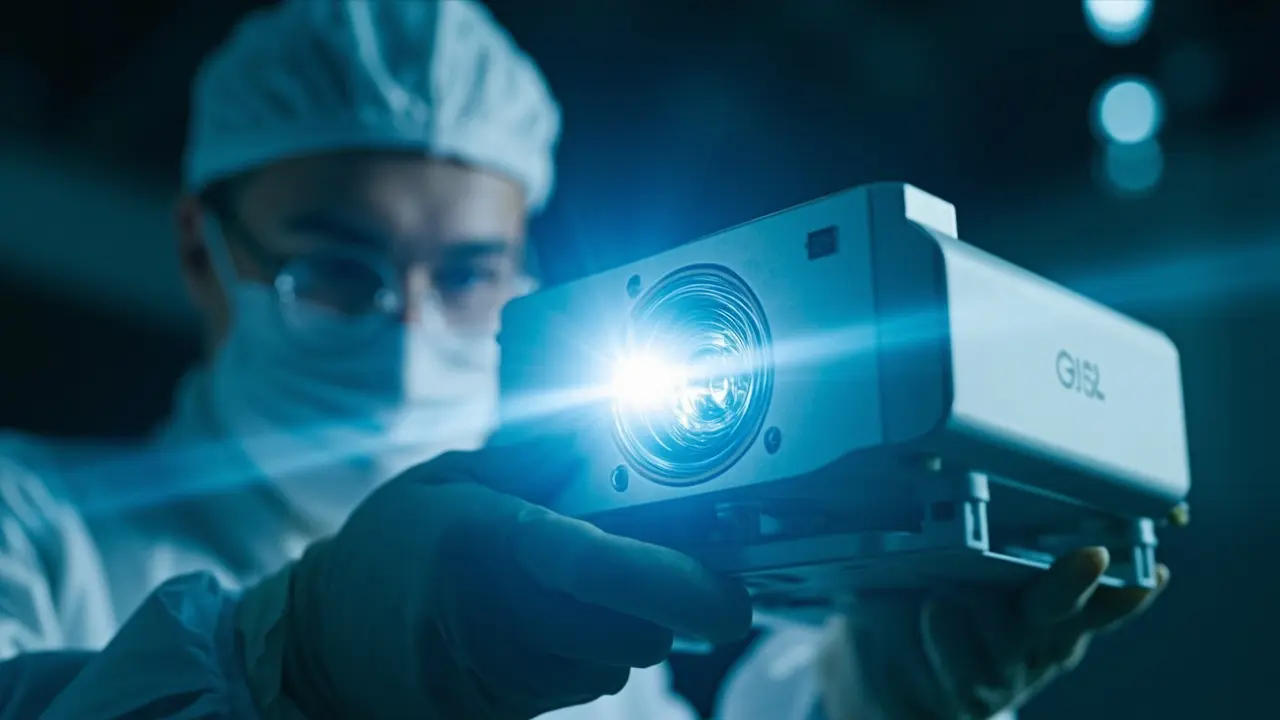
Projector quality control is not one thing — it is a layered system that runs through every phase of production, from incoming components to pre-shipment loading. For B2B buyers, understanding this system is the difference between receiving a 0.5% defect rate and a 5% defect rate. This guide explains the four QC stages (IQC, IPQC, OQC, PSI), AQL sampling standards, third-party inspection options, and how to design a quality agreement that protects your brand.
The Cost of Poor Quality
Defect rates that look small on a spec sheet can destroy your brand in the market:
| Defect Rate | Real-World Impact |
|---|---|
| 0.5% (1 in 200) | Acceptable for most retail |
| 1.0% (1 in 100) | Marginal; investigate root cause |
| 2.0% (1 in 50) | High; warranty cost spirals |
| 5.0% (1 in 20) | Brand-damaging; retailer action likely |
| 10.0% (1 in 10) | Catastrophic; recall or relaunch required |
The Four QC Stages
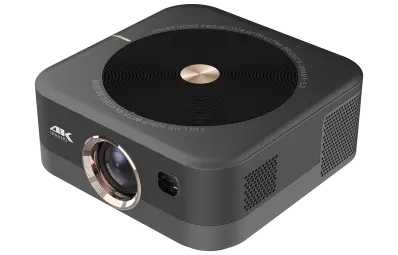
Distributors evaluating the B2B projector market can reference our GP94C Android Smart Projector for Home Theater—a production-validated platform covering Android 9 · 500 ANSI · Built-in Speakers, suitable as an OEM/ODM starting point.

Buyers looking for a turnkey smart OS reference should evaluate the GP95-GTV 400 ANSI Full-Sealed Smart Projector with Google TV Built-In. Google TV is licensed and pre-integrated, eliminating months of middleware work for ODM projects.
IQC (Incoming Quality Control)
IQC validates components before they enter the production line:
- DMD chips — sample test for pixel defects, optical alignment
- LED / laser modules — sample test for brightness, color temperature, lifetime
- SoCs and WiFi modules — sample test for functionality, RF performance
- PCBs — automated optical inspection (AOI), X-ray for BGA joints
- Plastic parts — sample test for color match, surface finish, dimensional accuracy
- Cables and accessories — sample test for continuity, dimensions, plug fit
What you want to see:
- Incoming material inspection records
- Component supplier audit reports
- Rejection and rework logs
IPQC (In-Process Quality Control)
IPQC catches defects during production:
- SMT — AOI on every board, X-ray on BGA joints, ICT (in-circuit test) sampling
- Optical engine assembly — alignment verified every 50 units (more frequently for high-spec models)
- PCBA functional test — every unit powered on, validated for SoC boot, WiFi/BT connectivity
- Sub-assembly — housing fit, port alignment, button feel
- Final assembly — full functional test before OQC
- IPQC frequency (every N units)
- Calibration records for optical alignment tools
- Yield rate tracking (% pass at each stage)
OQC (Outgoing Quality Control)
OQC is the final QC before packaging:
- Visual inspection — every unit inspected for scratches, panel gaps, finish
- Functional test — every unit tested: boot, image quality, audio, I/O ports, remote control
- Aging test — sample units run for 4–8 hours continuous to catch infant mortality
- Drop test — sample units tested for packaging integrity
- AQL sampling — final acceptance sampling per agreed plan
- AQL sampling plan in writing (ISO 2859-1)
- Aging test rack with hours counter
- Final QC inspection records per batch
PSI (Pre-Shipment Inspection)
PSI is the last gate before the container is loaded:
- Buyer-arranged or third-party — SGS, BV, TÜV, QIMA, AsiaInspection
- Sampling level — typically General Level II, AQL 1.0/2.5/4.0
- Inspection scope — quantity, packaging, labeling, random functional test, drop test
- Outcome — pass, conditional pass (with rework), fail (production held)
- PSI scheduled at production completion + 3 days
- PSI report from a recognized agency
- Issue resolution process (who decides what counts as a defect)
AQL Sampling Explained
AQL (Acceptable Quality Limit) is the statistical standard for sampling inspections. The two numbers you need to understand:
- AQL 1.0 — strict; for critical defects (functional failure, safety hazard)
- AQL 2.5 — standard; for major defects (cosmetic, usability)
- AQL 4.0 — loose; for minor defects (label position, packaging scuff)
Common AQL mistakes:
- Accepting factory AQL without written agreement
- Confusing critical vs. major vs. minor defects
- Not specifying what happens when AQL is exceeded (rework? re-inspection? scrap?)
Third-Party Inspection Options
When you cannot or do not want to fly to China for every PSI, hire a third-party inspector:
| Agency | Strengths | Cost per MD (man-day) |
|---|---|---|
| SGS | Global brand, rigorous | $300–$450 |
| Bureau Veritas | Strong in EU compliance | $280–$420 |
| TÜV | German engineering rigor | $320–$480 |
| QIMA (formerly AsiaInspection) | Tech-enabled, fast booking | $250–$380 |
| AsiaInspection | Wide coverage, good for small orders | $220–$340 |
| V-Trust | China-focused, competitive pricing | $200–$320 |
The Quality Agreement
Before your first production order, sign a written quality agreement. Key clauses:
- AQL sampling plan — critical 1.0, major 2.5, minor 4.0 at General Level II
- Defect definitions — explicit list of what counts as critical, major, minor
- Inspection frequency — IQC, IPQC, OQC, PSI all defined
- PSI authority — third-party agency chosen, scheduled, paid by whom
- Rejection handling — what happens to defective units (rework, scrap, replace)
- Field failure rate target — agreed percentage (typically <2% in first 90 days)
- Field failure response — warranty triage, RMA process, spare parts commitment
- Continuous improvement — quarterly review of yield rates, defect trends
Common Projector Defects (and How to Catch Them)
| Defect | Stage to Catch | Inspection Method |
|---|---|---|
| Dust on DMD | OQC | Dark-room white image test |
| Dead pixel on DMD | OQC | Color field test (red, green, blue, white) |
| Laser speckle | OQC | Static image test for 5 min |
| Fan noise too high | OQC | Decibel meter at 1m |
| WiFi drops | OQC | Continuous streaming test for 1 hour |
| Bluetooth pairing fail | OQC | Pair multiple devices |
| App crash | OQC | Launch top-10 apps in sequence |
| Panel gap | OQC | Visual inspection, caliper |
| Port loose | OQC | Insert/remove cables 5x |
| Speaker distortion | OQC | Reference audio at 80% volume |
| Boot logo wrong | OQC | Power on, verify logo |
| Packaging scuff | PSI | Visual inspection of 10% of units |
| Label error | PSI | Barcode scan test |
| Drop test fail | PSI | Drop from 1m, retest function |
The Right-Sized QC Program
For different order sizes, the QC investment differs:
| Order Size | Recommended QC Program |
|---|---|
| < 100 units | Factory OQC only. Buyer trust + factory reputation. |
| 100–500 units | Factory OQC + buyer-arranged PSI for first order. |
| 500–2,000 units | Full QC + third-party PSI every production run. |
| 2,000+ units | Full QC + third-party PSI + field failure tracking dashboard. |
- 100% burn-in for first 200 units
- Camera-based cosmetic inspection (AI vision)
- Barcode traceability per unit (for warranty lookup)
How to Use Field Failure Data
QC does not stop at shipment. Every field failure is a data point:
- Track by serial number — know which production batch each unit came from
- Categorize failures — optical, software, mechanical, electrical
- Root cause analysis — for failures > 0.5%, investigate factory-side root cause
- Corrective action — for systemic issues, require factory 8D report
- Quarterly review — yield trends, defect trends, response time
Conclusion and Next Step
Projector quality control is a layered system, not a single inspection. IQC catches bad components. IPQC catches assembly errors. OQC catches functional failures. PSI catches packaging and labeling issues. Each layer matters, and skipping any one of them shifts risk to the next.
💼 Need QC documentation for our OEM service?
Request a Free Quote | View Product Catalog
We provide full IQC, IPQC, OQC documentation with every production run and welcome third-party PSI on every shipment. Our typical defect rate on catalog SKUs is 0.3–0.8%, well below industry average. Engineering team responds within 24 hours.
