Posted At: May 07, 2026 - 4 Views

Projector Sample Order Process: From RFQ to Approved Sample in 14–35 Days
The projector sample order is the most important step in any OEM/ODM engagement. It is the moment you find out whether the factory's claims hold up to real-world testing, whether the firmware is mature, and whether the optical engine delivers what was promised. This guide explains how the sample process works, what to test, how to avoid common mistakes, and how to use the sample phase to set up a successful mass production order.

Why Samples Matter
A factory's catalog spec sheet and a working sample in your hand are not the same thing. Samples reveal:
- Actual measured brightness (vs. claimed)
- Actual fan noise (vs. spec)
- Actual WiFi/BT performance
- App compatibility (Netflix, YouTube, casting)
- Build quality (panel gaps, finish, button feel)
- Firmware maturity (boot time, OTA reliability, app crashes)
- Packaging presentation (in real life, not photos)
The Sample Order Process
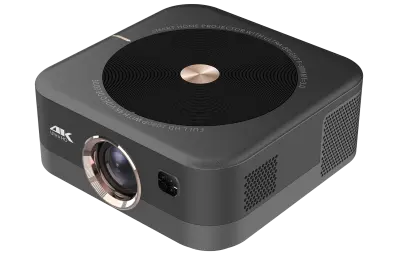
Distributors evaluating the B2B projector market can reference our GP94C Android Smart Projector for Home Theater—a production-validated platform covering Android 9 · 500 ANSI · Built-in Speakers, suitable as an OEM/ODM starting point.

Buyers looking for a turnkey smart OS reference should evaluate the GP95-GTV 400 ANSI Full-Sealed Smart Projector with Google TV Built-In. Google TV is licensed and pre-integrated, eliminating months of middleware work for ODM projects.
Step 1: Confirm Specifications (Day 1)
Before requesting a sample, lock your specifications in writing. Send a one-page brief that includes:
- Target resolution (1080p, 4K)
- Target brightness (ANSI lumens)
- Target throw ratio (standard, short, UST)
- Target light source (LED, laser)
- Target operating system (Android version, AOSP or GMS)
- Target connectivity (WiFi, BT, HDMI, USB-C)
- Target form factor (portable, ceiling-mount, UST)
- Target unit price (FOB)
- Target order quantity
- Target market countries
Step 2: Factory Issues Feasibility Memo (Days 2–7)
The factory responds with a feasibility memo that includes:
- Reference model from their catalog (if applicable)
- Spec alignment table (your target vs. their model)
- Spec gaps and proposed solutions
- Preliminary FOB price
- Sample cost and lead time
Step 3: Sample Cost and Payment (Days 7–10)
Sample costs typically range from $80–$300 per unit, depending on customization. Common sample cost structures:
| Sample Type | Typical Cost |
|---|---|
| Off-the-shelf catalog SKU | $80–$150 per unit |
| Logo pad-printed existing SKU | $100–$180 per unit |
| Custom firmware on existing hardware | $150–$250 per unit |
| Custom housing color | $180–$300 per unit |
| Bespoke ODM prototype | $300–$800 per unit |
Step 4: Sample Production (Days 10–25)
The factory prepares the sample. Lead times vary:
| Sample Type | Lead Time |
|---|---|
| Off-the-shelf | 3–7 days |
| Logo customization | 7–14 days |
| Firmware customization | 14–21 days |
| Custom housing | 14–25 days |
| Bespoke ODM | 30–60 days |
Step 5: Sample Shipping (Days 25–32)
Express shipping (DHL, FedEx, UPS) is standard for samples. Transit time:
- USA, EU, UK: 3–5 days
- Middle East, India: 4–6 days
- Latin America: 5–7 days
- Australia: 4–6 days
What to Test in a Projector Sample
Once the sample arrives, you have a 5–10 day window to test before approving. Use a structured test plan:
Optical Performance
| Test | Method | Acceptance Criteria |
|---|---|---|
| ANSI lumen output | Lux meter at standard throw distance | ±10% of spec |
| Contrast ratio | FOFO (full on / full off) measurement | Within spec |
| Color gamut | Spectroradiometer or colorimeter | ≥90% Rec.709 |
| Color brightness | Color light output measurement | ≥80% of white output |
| Focus uniformity | Resolution chart at corners | Sharp focus across image |
| Keystone range | Project at 30° tilt, measure distortion | <2% distortion at max keystone |
| Fan noise | Decibel meter at 1 meter | ≤35 dB at full brightness |
| Heat output | Surface thermometer after 4 hours | ≤55°C on housing |
Software Performance
| Test | Method | Acceptance Criteria |
|---|---|---|
| Cold boot time | Power on to launcher | <30 seconds |
| App launch (Netflix) | Tap to playing | <5 seconds |
| WiFi reconnection | Disconnect, reconnect | <10 seconds |
| Casting (Miracast / AirPlay) | Connect phone, stream | <15 seconds, smooth playback |
| Bluetooth pairing | Pair speaker or remote | Reliable, <5 seconds |
| OTA update | Trigger manual update | Successful in <5 minutes |
| Voice control | "Open Netflix" (if supported) | Reliable recognition |
Build Quality
| Test | Method | Acceptance Criteria |
|---|---|---|
| Panel gaps | Visual inspection | ≤0.3 mm uniform gaps |
| Button feel | Manual press | Tactile, no wobble |
| Lens clarity | Visual inspection | No dust, no scratches |
| Housing finish | Visual inspection | No scratches, no color mismatch |
| Port fit | Insert and remove cables | Snug, no wobble |
| Speaker quality | Play reference audio | No distortion at 80% volume |
| Remote control | All buttons functional | All responsive |
| Drop test (optional) | Drop from 1m onto carpet | No functional damage |
Compliance Markings
Verify CE, FCC, RoHS markings on housing and packaging. Verify model number and serial number format match your retail requirements.
Common Sample Mistakes
Five errors to avoid:
- Skipping the sample phase — never order mass production without a tested sample
- Testing only brightness — fan noise, WiFi reliability, and app compatibility are equally important
- Approving a sample too quickly — spend at least 5 business days testing
- Not testing edge cases — try low WiFi signal, weak Bluetooth, multiple apps open, extended runtime
- Failing to compare samples — order from 2–3 factories and compare side-by-side
What to Do If the Sample Fails
If the sample does not meet your acceptance criteria:
- Document the failure in writing — send a detailed report to the factory within 24 hours
- Specify the remediation — do not just say "fail", say "fan noise exceeds 40 dB at full brightness, please reduce to ≤35 dB"
- Request a revised sample — most factories will provide one at no additional cost
- Set a deadline — give the factory 7–14 days for a revised sample
- Consider switching factories — if the factory cannot fix the issue in two revision cycles, move on
Sample Approval Checklist
Before approving a sample and signing the production PO, confirm in writing:
- All optical performance tests passed
- All software performance tests passed
- All build quality tests passed
- Compliance markings verified
- Packaging artwork approved
- Manual content approved
- Firmware lock — no further changes until production
- Tooling ownership clause signed
- Quality agreement signed
- Pricing confirmed at your ordered quantity
From Sample to Mass Production
After sample approval, the path to mass production:
- Sign PO with locked specs, locked pricing, locked delivery date
- Pay deposit (typically 30% T/T)
- Approve long-lead components (DMD, laser, custom tooling)
- Schedule pre-shipment inspection for production completion + 3 days
- Approve packaging artwork at least 2 weeks before production completion
- Confirm shipping mode (sea, air, courier) and trade terms (FOB, CIF, DDP)
Conclusion and Next Step
The projector sample order process is the foundation of a successful OEM/ODM engagement. Treat it as seriously as the production order — because the issues you find in samples are the issues that will multiply across thousands of units in mass production.
💼 Ready to order a sample?
Request a Free Quote | View Product Catalog
We ship evaluation samples within 3–14 days for catalog SKUs and 25–35 days for custom configurations. Sample cost is refundable against your first PO of 500+ units. Our engineering team will provide a sample test plan tailored to your target use case.
