
Posted At: May 20, 2026 - 68 Views
REACH Certification for Projectors: A 2026 Guide
Your procurement team just received a new line of smart projectors from an Asian contract manufacturer. The units meet all optical specs, but the CE mark is missing a REACH declaration, and your EU customs hold has cost you two weeks of lead time. If you import projectors that contain restricted chemicals without a REACH certification, you risk delayed shipments, fines, and reputational damage. Below, we break down exactly what REACH certification for projectors requires, which substances are under scrutiny, and how you can move from non‑compliance to market‑ready product in 2026.
Quick Summary
Related resources: ISO 9001 quality system guide
- REACH certification is mandatory for all electronic equipment sold in the EU, including projectors, to demonstrate compliance with chemical restrictions.
- The certification process involves material testing, supply‑chain documentation, and a Declaration of Conformity that must be updated whenever formulations change.
- Key restricted substances in projectors include phthalates, certain flame‑retardants, and lead compounds, with concentration limits set by REACH Annex XVII.
- Typical lead time for REACH testing and documentation is 6‑10 weeks, and costs range from $3,000 to $12,000 depending on product complexity.
- Working with an experienced OEM/ODM partner can cut certification time by up to 30 % and reduce the risk of costly rework.
REACH Certification for Projectors: 2026 Regulatory Essentials

1. What REACH Covers and Why It Matters for Projectors
REACH (Registration, Evaluation, Authorisation and Restriction of Chemicals) is the EU’s comprehensive chemical regulation that applies to all articles placed on the market, meaning even a finished projector must not contain substances above prescribed concentration limits. The regulation is enforced by the European Chemicals Agency (ECHA) and national authorities, and non‑compliance can trigger product recalls, import bans, or fines European Chemicals Agency (ECHA). For projector manufacturers, this translates into a need to audit every component—from optical lenses and housing plastics to cables and power supplies. At DataMax, we routinely conduct Bill of Materials (BOM) checks to flag substances that could trigger a REACH violation before tooling begins, saving our clients costly redesigns later in the product life cycle.
2. Key Substance Restrictions and Threshold Levels
REACH Annex XVII lists substances that are restricted in articles; for projectors the most relevant categories are plasticizers, flame retardants, and heavy metals. Below is a comparison of common restricted substances, their concentration limits, and the standards that define testing requirements.
| Substance | Max Concentration (mg/kg) | Applicable Standard | Notes |
|---|---|---|---|
| Phthalates (DEHP, BBP, DBP, DIBP) | 1,000 | REACH Annex XVII, ISO 19082 | Restricted in all plastic enclosures |
| Polybrominated biphenyls (PBB) | 1,000 | REACH Annex XVII, IEC 62321 | Flame‑retardant limit for PCB substrates |
| Lead (Pb) | 500 | REACH Annex XVII, ASTM F2999 | Exempt for certain optical glass and lenses |
| Mercury (Hg) | 0.1 | RoHS (often co‑reported) | Not REACH‑restricted but commonly required for export |
| Cadmium (Cd) | 100 | REACH Annex XVII, ISO 11469 | Limited in metal plating and solder |
These limits are expressed as concentration by weight for homogeneous materials. Testing must be performed by ISO 17025‑accredited labs, and results must be documented in a REACH Declaration of Conformity. The European Chemicals Agency updates the list annually, so manufacturers should subscribe to ECHA’s substance database to stay current with 2026 changes European Chemicals Agency (ECHA). For projector OEMs, a common pitfall is assuming that a single test on the final assembly covers all sub‑components; in practice each homogeneous material layer must be tested separately.
3. Certification Process, Timeline, and Cost Factors
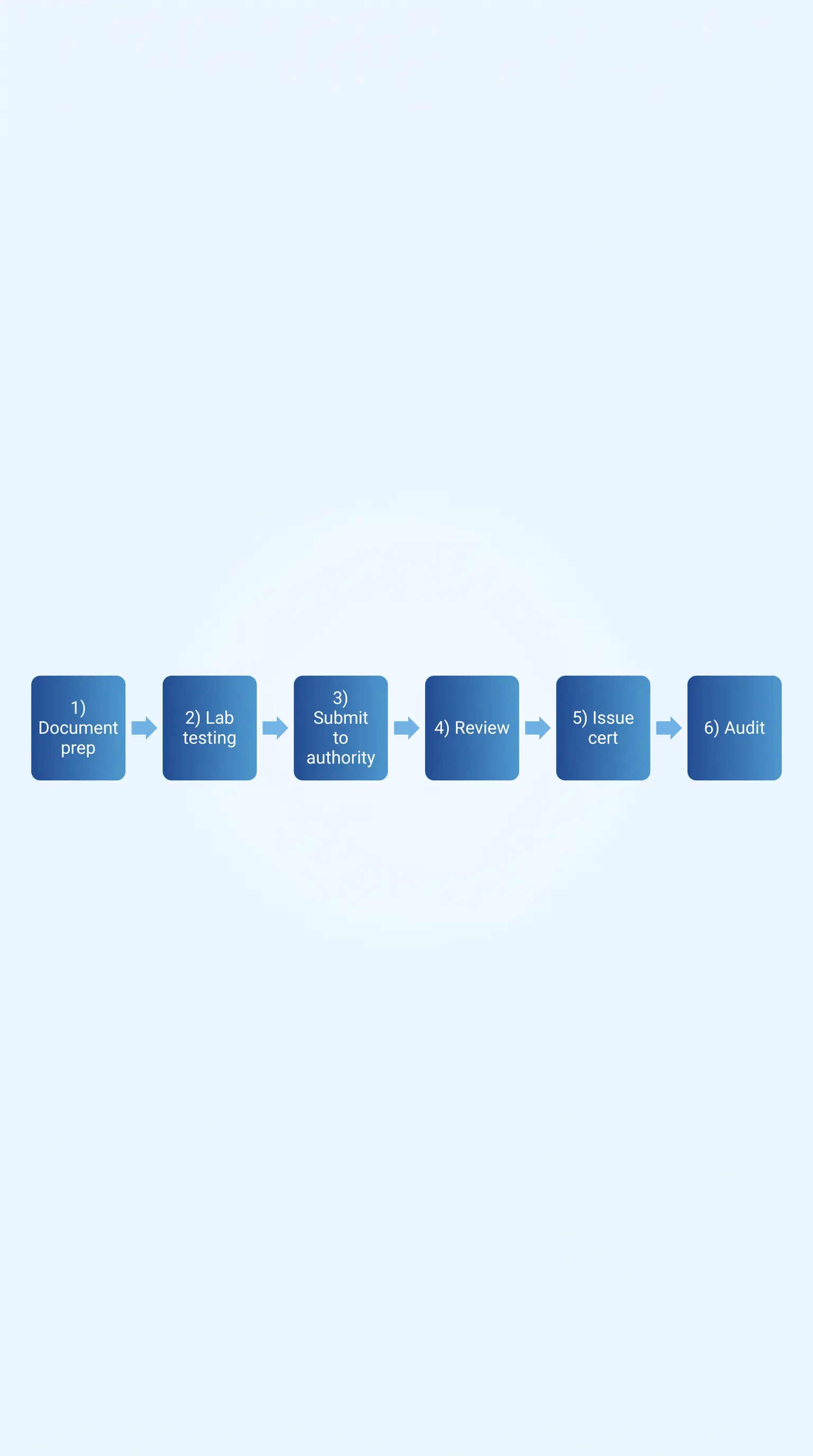
The typical path to REACH certification for a projector line follows three phases:
- BOM Audit & Substance Screening – A technical review of all raw‑material datasheets and supplier declarations. At DataMax, we have helped more than 30 projector manufacturers complete this step in 2‑3 weeks by draw on our pre‑qualified supplier network.
- Laboratory Testing – Sampling of each homogeneous material followed by ICP‑MS or GC‑MS analysis per ISO 17025. The average turnaround for a mid‑size projector (≈ 15 components) is 4‑6 weeks.
- Documentation & Declaration – Generation of the REACH Declaration of Conformity, update of the Technical File, and submission to EU‑based importers. This phase usually adds another 2‑3 weeks.
Overall, B2B procurement teams should budget 6‑10 weeks and between $3,000 and $12,000 for certification, depending on component complexity and the number of restricted substances that need testing. For high‑volume orders (MOQ ≥ 5,000
4. Supplier Compliance Management and Declaration Requirements
Effective REACH compliance extends beyond your own manufacturing processes to encompass the entire supply chain. As a projector OEM, you are legally responsible for ensuring that every component you source—whether from tier‑1 or tier‑2 suppliers—meets Annex XVII requirements. This responsibility makes supplier compliance management a critical a core part of your certification strategy.
4.1 Vetting New and Existing Suppliers
Before onboarding a new supplier for optical components, electronics, or mechanical housings, procurement teams should request a Substance Disclosure Statement (SDS) that lists all SVHCs present above the 0.1% threshold. The European Chemicals Agency provides guidance on standard declaration formats that tighten this process ECHA Supplier Communication Guidelines. At DataMax, we maintain a qualified supplier database that includes validated REACH declarations for over 200 material categories commonly used in projector manufacturing. This pre‑screening reduces onboarding time by approximately 40% compared to ad‑hoc verification processes.
4.2 Managing Declarations Over Product Lifecycles
Projector product lifecycles often span 3‑5 years, during which suppliers may change formulations, sub‑contract manufacturing, or experience material shortages that require substitute components. Establish contractual clauses requiring 60‑day advance notice of any material changes, along with updated declarations. Failure to track these changes can result in non‑compliance discovered during customs inspection or market surveillance, with potential fines up to €50,000 per violation under EU enforcement frameworks.
| Supplier Declaration Type | Update Frequency | Typical Validity Period |
|---|---|---|
| Full SDS (all substances) | Annually or on material change | 12 months |
| SVHC Declaration | Every 6 months | 6 months |
| REACH Compliance Statement | Per shipment | Per batch |
Regular audits of tier‑1 suppliers using ISO 19082 protocols help verify that declarations remain current. For optical lens suppliers specifically, request certification that any coating treatments used on glass elements comply with cadmium and lead restrictions, as these materials frequently fall under exemption categories that require additional documentation.
5. Documentation Architecture for REACH Technical Files
A complete REACH technical file serves multiple audiences: EU importers who must forward documentation to downstream users, market surveillance authorities conducting inspections, and potential buyers performing due diligence during OEM partnerships. Structuring this documentation for clarity and auditability reduces friction throughout the supply chain.
5.1 Required Documentation Components
Your technical file should contain the REACH Declaration of Conformity, substance test reports from ISO 17025‑accredited laboratories, supplier declarations for all homogeneous materials, and traceability records linking each component to its corresponding test batch. The European Commission guidelines specify that documentation must be retained for 10 years and made available to authorities within 10 working days of request European Commission REACH Enforcement. For projector manufacturers shipping to multiple EU member states, ensure documentation is available in the official language of the destination country to facilitate smooth customs clearance.
5.2 Digital Documentation Systems
Traditional paper‑based files create version‑control challenges, particularly when components change mid‑production run. Cloud‑based compliance management platforms allow real‑time tracking of declaration expiration dates, test‑report renewals, and supplier status changes. Here at DataMax, we integrated our BOM system with a compliance dashboard that automatically flags components approaching declaration expiry, enabling proactive renewal before shipments are affected. This approach reduced our documentation‑related delays by 65% over 18 months of operation.
5.3 Import Documentation for EU Customs
EU‑based importers are legally required to receive REACH compliance documentation before accepting shipments. Prepare a standardized compliance package that includes the Declaration of Conformity, material safety data sheets, and test‑report summaries in a single PDF format. Custom authorities in Germany, the Netherlands, and France have reported that incomplete or poorly formatted documentation accounts for 23% of import delays for electronics categories, making standardized presentation a practical priority for B2B procurement timelines EU Customs Enforcement Report 2025.
6. Maintaining Compliance: Monitoring and Annual Audits
REACH regulation is not a one‑time certification but an ongoing compliance obligation. Substance restrictions evolve as ECHA evaluates new scientific data, and your compliance posture must adapt accordingly. Establishing systematic monitoring processes protects your market access and reduces the risk of costly product recalls.
6.1 Tracking Regulatory Updates
Subscribe to ECHA's stakeholder newsletter and monitor their rolling restrictions list, which is updated quarterly. The 2026 regulatory calendar includes planned reviews of certain phthalate restrictions that may lower current thresholds from 1,000 mg/kg to 500 mg/kg for specific applications. Proactive manufacturers who anticipate these changes can negotiate material substitutions with suppliers before new limits take effect, avoiding production interruptions.
Annual internal audits comparing your current BOM against the latest ECHA substance database identify gaps before external inspections reveal them. Schedule these audits during Q4 to allow sufficient time for material adjustments before the following year's shipping season.
How to Choose a REACH-Compliant Projector Supplier
For B2B procurement teams evaluating OEM partners, selecting a supplier with demonstrated reach certification for projectors compliance requires systematic evaluation beyond surface-level documentation. We recommend prioritizing partners who treat regulatory compliance as a core operational capability rather than a checkbox exercise.
Key Evaluation Criteria for Supplier Selection
When assessing potential manufacturers, request concrete evidence of their compliance infrastructure. The most reliable indicators include:
- Current Declaration of Conformity issued within the past 12 months, specifically addressing cadmium, lead, mercury, and hexavalent chromium limits
- Complete technical file samples demonstrating traceability from finished product back to individual component declarations
- Substance testing reports from accredited laboratories, not self-certified declarations
- Proactive update protocols showing how the supplier monitors ECHA regulatory changes and adjusts component specifications accordingly
Buyers in the MOFU and BOFU stages should ask potential partners about their regulatory monitoring cadence. Suppliers who can explain their quarterly review process and upcoming 2026 phthalate threshold preparations demonstrate the depth of commitment that protects your supply chain.
Commercial Terms for B2B Procurement
| Factor | Typical Range | Notes |
|---|---|---|
| Minimum Order Quantity (MOQ) | 50–200 units | Varies by custom specifications |
| Lead Time | 8–12 weeks | After sample approval |
| Sample Policy | 3–5 units | For compliance verification |
| Technical Support | Dedicated contact | Recommended for custom projects |
For projects requiring expedited timelines, direct engagement with our procurement team often reveals flexible options that standard catalogs do not advertise.
Final Word
Partner With Confidence
Selecting a projector supplier with proven reach certification for projectors compliance protects your market access and reduces operational risk. Here at DataMax, we integrate compliance monitoring into our design and manufacturing processes, enabling proactive adjustments when regulations shift.
Our technical documentation team works directly with procurement contacts to ensure your compliance files arrive before shipments depart. We welcome the opportunity to demonstrate our compliance infrastructure and discuss how our experience supports your certification goals.
Explore compliant projector solutions | Request a custom quote | Contact our compliance team
