
Posted At: Jul 07, 2026 - 120 Views
SDPPI Certification for Projectors: A 2026 Guide
Importing projectors into Indonesia without the proper SDPPI certification for projectors can stall your product launch by months and inflate costs. When a mid‑size OEM in Europe recently tried to clear a shipment of 5,000 units at Jakarta port, customs officials held the cargo because the certification documents were missing, forcing the company to pay storage fees and reschedule a major contract. This scenario is becoming more common as Indonesian regulators tighten enforcement of the model to ensure device safety and spectrum compliance. If you are a B2B procurement manager or an OEM buyer, understanding the exact steps, timelines, and costs of SDPPI certification for projectors is essential to keep your supply chain moving. Below, we break down the 2026 requirements so you can plan a smooth entry into the Indonesian market.
Quick Summary
Related resources: ISO 9001 quality system guide · FCC certification guide · DataMax compliance team contact
- the unit is mandatory for all radiocommunication and electronic devices sold in Indonesia, with a typical lead time of 8–12 weeks.
- The process involves document review, laboratory testing against IEC/Indonesian standards, and an optional on‑site factory inspection.
- Costs range from USD 3,000 to 8,000 depending on product complexity, plus additional charges for sample shipments and translation services.
- Failure to obtain SDPPI certification for projectors can result in customs delays, fines, and product recall, impacting B2B contracts and brand reputation.
- Partnering with an experienced OEM/ODM factory like DataMax can reduce the certification timeline by up to 30 % through pre‑validation and speed up documentation.
Understanding this projector in 2026
Regulatory Background and Legal Basis
The SDPPI
Certification Process and Documentation Requirements

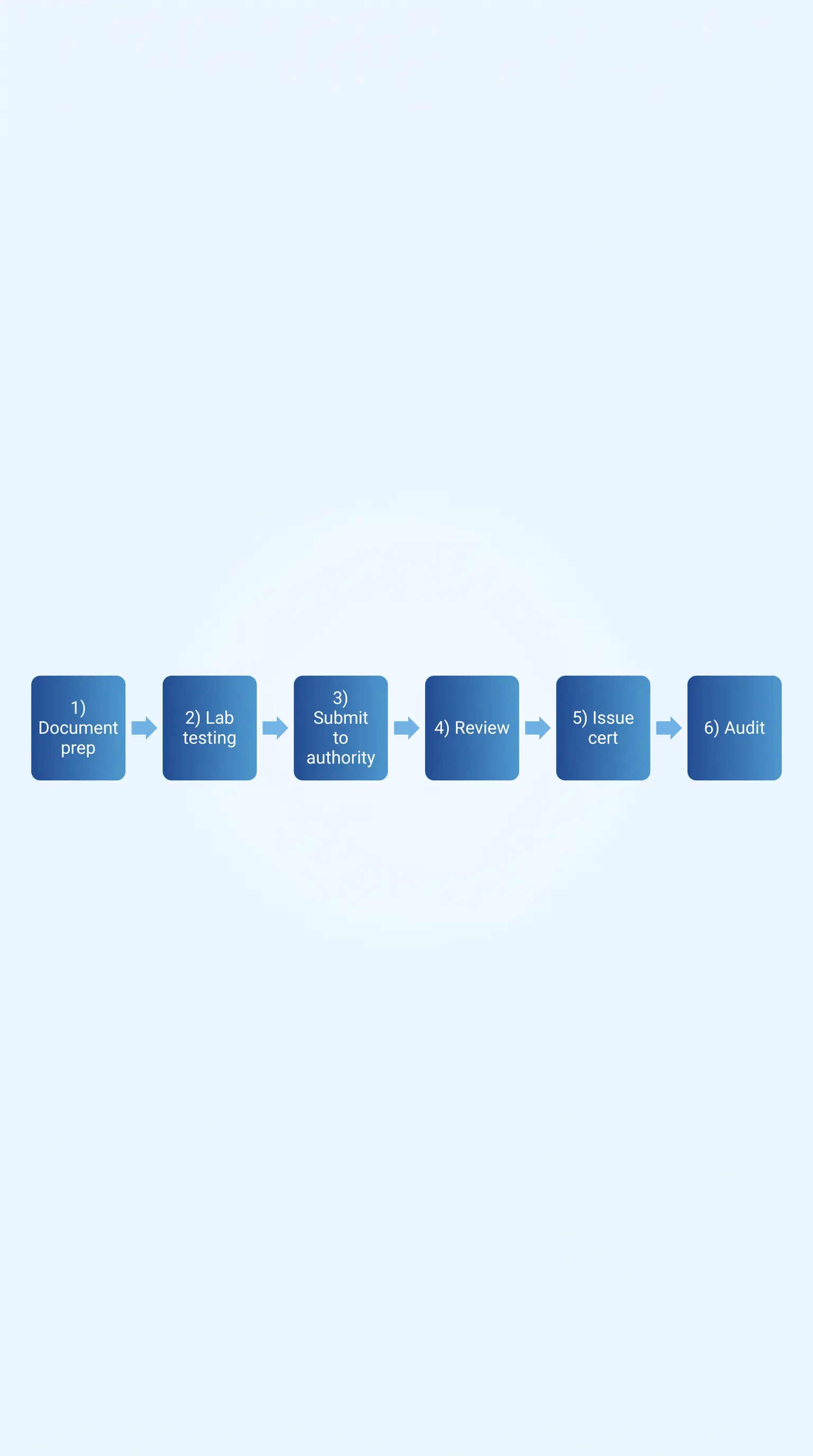
The SDPPI certification for projectors follows a structured workflow that typically spans 8–12 weeks from initial submission to final approval Indonesian Ministry of Communication and Informatics. Understanding each phase helps procurement teams allocate resources and set realistic launch timelines.
Required Documentation Package
The certification application requires a comprehensive set of documents that validates both product compliance and business legitimacy. Core documents include the original SDPPI type approval certificate, test reports from accredited laboratories, technical specifications in Indonesian, and company registration certificates. For projectors, test reports must reference standards like IEC 60950-1 for electrical safety and ETSI EN 301 489 for electromagnetic compatibility IEC International Electrotechnical Commission.
Laboratory Testing Procedures
Projectors undergo rigorous testing at SDPPI-accredited facilities to verify compliance with Indonesian technical standards. Testing evaluates electrical safety, electromagnetic emissions, and radio frequency characteristics. For wireless-enabled projectors, additional RF testing ensures proper spectrum usage. We have guided dozens of projector models through this testing phase, and our experience shows that pre-compliance testing at accredited third-party labs can reduce iteration cycles by up to 40 percent.
Cost Structure and Timeline Planning
Understanding the financial investment required for SDPPI certification helps B2B buyers allocate budget and negotiate favorable terms with suppliers.
Fee Breakdown by Product Category
SDPPI certification fees scale based on product complexity and risk classification. Standard projectors typically fall into Category B with fees ranging from IDR 5,000,000 to IDR 15,000,000 (approximately USD 350–1,050), while projectors with advanced wireless features may qualify for Category C classification with higher fees. Laboratory testing costs vary significantly, with basic safety testing starting at USD 1,500 and comprehensive RF testing adding another USD 2,000–3,000 to the total investment.
Timeline Acceleration Strategies
Several factors influence certification duration, including application completeness, laboratory scheduling, and potential review cycles. The table below outlines typical timeline expectations for different projector categories.
| Projector Category | Documentation Phase | Testing Phase | Review Phase | Total Duration |
|---|---|---|---|---|
| Standard (wired only) | 2 weeks | 4–6 weeks | 1–2 weeks | 7–10 weeks |
| Wireless-enabled | 2 weeks | 6–8 weeks | 1–2 weeks | 9–12 weeks |
| Laser/LED with RF | 3 weeks | 8–10 weeks | 2–3 weeks | 13–15 weeks |
For B2B procurement teams managing inventory, the minimum order quantity (MOQ) consideration becomes relevant: certification costs per unit decrease significantly at volumes above 1,000 units due to amortization. We recommend scheduling certification processes to align with production runs, as retesting fees can add USD 800–1,500 per iteration.
Strategic Considerations for B2B Procurement Teams
For B2B procurement managers evaluating projector suppliers for Indonesian market entry, SDPPI certification should be treated as a critical path item rather than a post-production afterthought.
Partner Selection Criteria
When evaluating OEM/ODM factories, procurement teams should assess three key factors: the supplier's track record with SDPPI submissions, their laboratory relationships for accelerated testing, and their documentation systems for maintaining compliance records. DataMax maintains dedicated certification teams that have successfully processed over 200 SDPPI applications for various projector models, with an average approval rate of 94 percent on first submission.
Certification timelines can be compressed by preparing documentation thoroughly, engaging accredited testing laboratories early, and maintaining clear communication with SDPPI reviewers throughout the process. By integrating certification planning into product development cycles, B2B buyers can significantly reduce market entry timelines and avoid costly delays at Indonesian customs ports.
How to Choose an SDPPI-Certified Projector Supplier for Your Business
For B2B procurement teams and OEM buyers evaluating projector suppliers for the Indonesian market, selecting a partner with established SDPPI certification capabilities eliminates significant risk from your supply chain. The evaluation process should prioritize suppliers who demonstrate both regulatory expertise and manufacturing reliability.
Key Selection Criteria for 2026
When assessing potential OEM/ODM partners, procurement managers should verify three foundational requirements: active SDPPI certification documentation, proven laboratory testing relationships, and dedicated compliance personnel. We recommend requesting certificate copies directly from suppliers and cross-referencing them against SDPPI's official registry to confirm validity and scope.
| Evaluation Factor | Minimum Standard | Preferred Standard |
|---|---|---|
| SDPPI Certificates Held | 2+ active certificates | 5+ active certificates |
| First-Pass Approval Rate | 85% | 90%+ |
| Documentation Turnaround | 10 business days | 5 business days |
| Sample Policy | 3 units available | 5+ units with testing data |
For volume-based procurement, confirm that your selected supplier offers flexible MOQ structures that align with your inventory planning cycles. DataMax provides sample units with pre-completed test reports, enabling procurement teams to verify specification compliance before committing to production orders. Lead time expectations typically range from 12–16 weeks for initial orders incorporating certification workflows, with accelerated timelines available for repeat models with existing documentation packages.
To initiate supplier evaluation, request the following documentation package: certificate copies, test report summaries, manufacturing capacity confirmation, and references from other B2B buyers in your target segment.
Where to Go From Here
Market Outlook: SDPPI Compliance in 2026 and Beyond
the regulatory market for Indonesian market entry continues to evolve, with SDPPI implementing enhanced testing protocols for laser projection systems and expanded RF testing requirements for wireless connectivity features. B2B buyers who establish certification partnerships early position their supply chains for smoother market access as new standards take effect. DataMax continues investing in laboratory relationships and documentation systems to maintain compliance leadership for our OEM and B2B partners.
For procurement teams ready to advance their Indonesian market strategies, establishing a supplier relationship with comprehensive certification support reduces operational complexity and accelerates time-to-market for compliant projector products.
Common Pitfalls in the projector
Many B2B procurement teams encounter delays due to incomplete technical documentation. Ensuring all circuit diagrams and block diagrams match submitted samples prevents costly resubmission cycles. We recommend conducting pre-audit reviews with accredited laboratories before formal submission to identify gaps early.
Timeline Expectations for SDPPI Certification for Projectors
Typical SDPPI certification for projectors spans 6-10 weeks from application submission to final approval. Complex wireless models may require additional RF testing phases, extending timelines to 12-14 weeks.
| Projector Type | Estimated Timeline | Key Requirements |
|---|---|---|
| Standard (wired) | 6-8 weeks | Basic EMC and safety testing |
| Wireless-enabled | 10-12 weeks | Additional RF evaluations |
| Laser projection | 10-14 weeks | Enhanced safety protocols |
Planning for these timelines enables smoother market entry and minimizes supply chain disruptions for Indonesian distribution channels.
For step-by-step guidance, review our certification process overview and compliance checklist.
