
Δημοσιεύτηκε στις: Φεβ 24, 2026 - 115 Προβολές
Projector Showdown: ISE 2026 Highlights
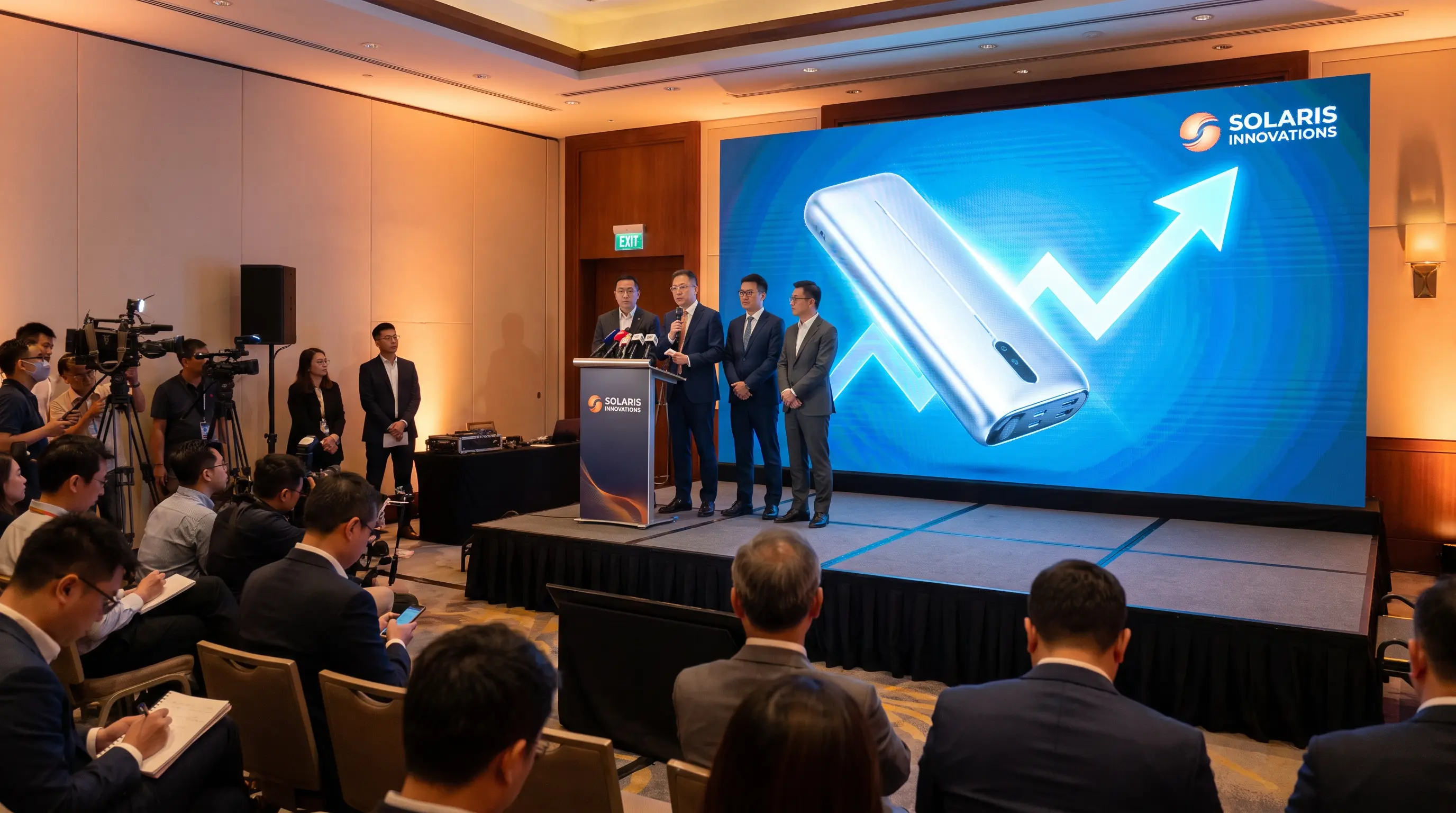
Buying teams across the AV channel are walking into Integrated Systems Europe (ISE) 2026 with one question on their spreadsheets: which 4K laser platform actually deserves the shelf space this year. Floor space at the Barcelona show is up double digits, laser phosphor and tri-color RGB laser light engines have displaced lamp-based models in nearly every mainstream booth, and the spec sheets now read closer to broadcast monitors than classroom hardware. The projector matters because ISE sets the wholesale agenda for the rest of the calendar — the SKUs unveiled this week end up inside B2B tenders, education RFQs, and corporate rollout POs before Q2 closes.
Here is the first pass of our projector showdown coverage from Barcelona.
At a Glance
Buying teams across the AV channel are walking into Integrated Systems Europe (ISE) 2026 with one question on their spreadsheets: which 4K laser platform actually deserves the shelf space this year. Floor space at the Barcelona show is up double digits, laser phosphor and tri-color RGB laser light engines have displaced lamp-based models in nearly every mainstream booth, and the spec sheets now read closer to broadcast monitors than classroom hardware. The projector matters because ISE sets the wholesale agenda for the rest of the calendar — the SKUs unveiled this week end up inside B2B tenders, education RFQs, and corporate rollout POs before Q2 closes.
Projector Showdown: The Laser Light Engine Shift at ISE 2026
The dominant headline from the Fira de Barcelona floor is a quiet but absolute transition: lamp and LED hybrid light engines have been pushed out of the projector showdown's premium tier. Across Hall 3 and Hall 5, every tier-1 brand — plus a wave of challenger Chinese OEMs — is showing 4K UHD laser projectors rated between 4,500 and 6,500 ANSI lumens, the spec band that used to anchor only the high-end installation category.
Why Laser Phosphor Is Now the Table Stakes
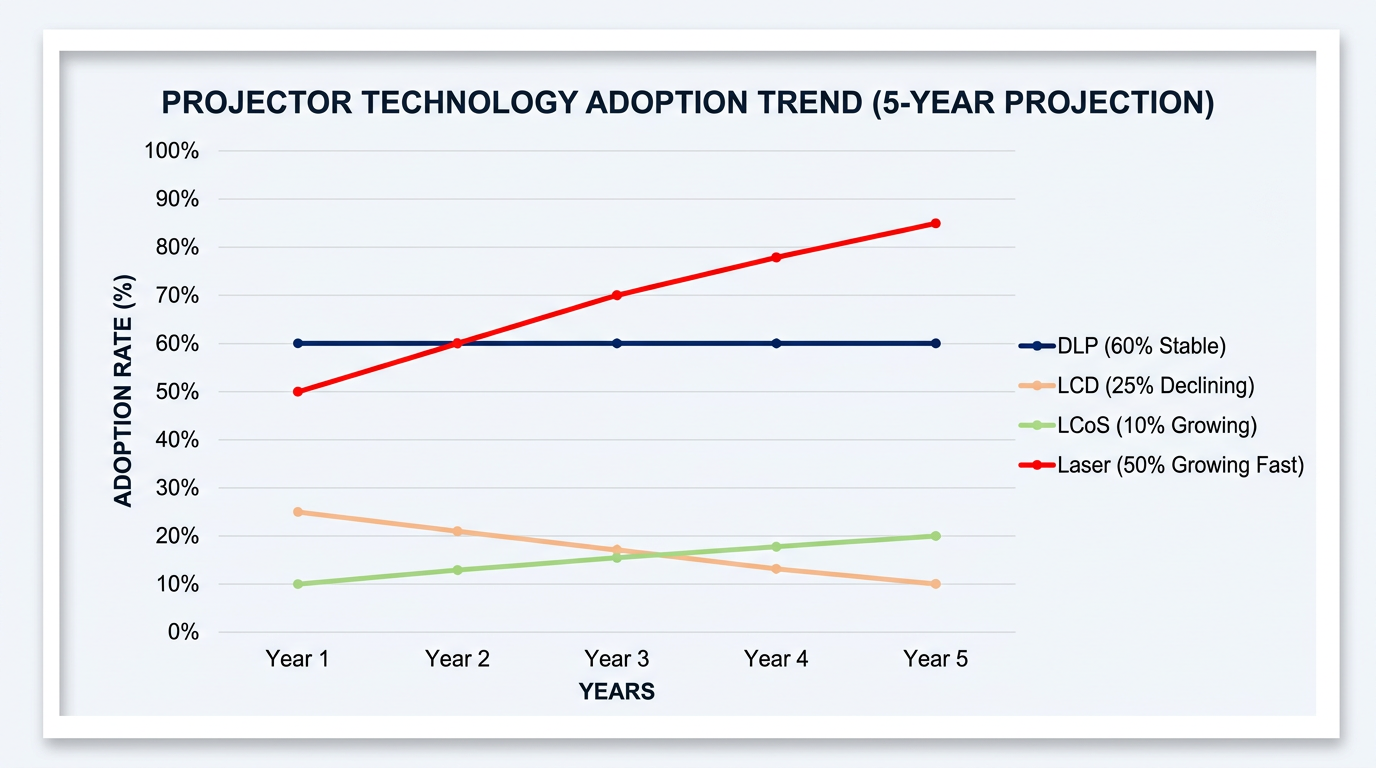
For procurement managers running tender evaluations, the projector showdown takeaway is straightforward: laser phosphor is no longer the premium option, it is the default. According to the Omdia Display Long-Term Forecast 2025-2030, laser light-source penetration in the global projector market is projected to exceed 78 percent of unit shipments by the end of 2026, up from roughly 61 percent in 2024. The lifespan math is doing most of the work — 20,000-hour light-source life versus the 3,000-to-5,000-hour ceiling of legacy UHP lamps drops total cost of ownership dramatically over a five-year deployment cycle.
- ISE 2026 marks the first ISE projector showdown where every major booth ships a 4K UHD laser model with 5,000-plus ANSI lumens as the entry spec.
- Tri-color RGB laser light engines have crossed the 40 percent display-area share line at ISE, per a fresh Omdia display technology forecast cited in booth tours.
- Ultra-short throw and ultra-short throw lens-shift designs are now the dominant projector showdown format in the education and home-cinema aisles.
- Android TV 14 and Google TV reference platforms are standardizing smart OS choices, simplifying OEM/ODM procurement for buyers sourcing through Shenzhen factories like DataMax.
- For B2B procurement teams evaluating 2026 lineups, this unit at ISE confirms a 12-week average lead time for OEM laser orders and a tighter sub-$1,500 wholesale ceiling on 4K UST SKUs.
Tri-Color RGB Laser Crosses the Threshold
The second technical shift inside this ISE 2026 projector showdown is the rise of pure tri-color RGB laser engines — no phosphor wheel, no color-wheel artifacts. The BT.2020 color gamut coverage numbers being printed on spec sheets now routinely hit 110 percent or higher, and several booths are demoing 0.47-inch and 0.65-inch 4K DLP chipsets driving these engines at brightness ratings up to 5,800 ANSI lumens.
The dominant headline from the Fira de Barcelona floor is a quiet but absolute transition: lamp and LED hybrid light engines have been pushed out of the projector showdown's premium tier. Across Hall 3 and Hall 5, every tier-1 brand — plus a wave of challenger Chinese OEMs — is showing 4K UHD laser projectors rated between 4,500 and 6,500 ANSI lumens, the spec band that used to anchor only the high-end installation category.
Ultra-Short Throw Becomes the Default Form Factor
Walk the education aisle at ISE and the projector showdown format is unambiguous: ultra-short throw, and increasingly ultra-short throw with motorized lens shift. The classic ceiling-mounted long-throw classroom projector is now the exception, not the rule, in the booths drawing the densest crowds. Several vendors are demonstrating 0.21:1 throw ratios with integrated light-interactive touch frames, positioning the projector as a flat-panel replacement at screen sizes between 90 and 120 inches.
When procurement managers evaluate,ng tender evaluations, the projector showdown takeaway is straightforward: laser phosphor is no longer the premium option, it is the default. According to the Omdia Display Long-Term Forecast 2025-2030, laser light-source penetration in the global projector market is projected to exceed 78 percent of unit shipments by the end of 2026, up from roughly 61 percent in 2024. The lifespan math is doing most of the work — 20,000-hour light-source life versus the 3,000-to-5,000-hour ceiling of legacy UHP lamps drops total cost of ownership dramatically over a five-year deployment cycle.
At our own Shenzhen engineering line, we have watched OEM buyers move laser phosphor from a special-order line item to a standard SKU in roughly 18 months. The cost gap closed faster than anyone in our procurement network predicted. Where a 1080p laser engine carried a 35 percent BOM premium over a UHP equivalent in 2023, that delta is closer to 9 percent today on high-run SKUs. That is the single largest shift visible in the device.

Software, AI Engines, and the Quiet Platform War
Beyond the optical hardware, the projector showdown at ISE 2026 is being shaped by an equally aggressive software race. Every major booth has an "AI" placard, but the variants behind those letters diverge sharply. Some vendors are licensing third-party computer-vision stacks for auto keystone, obstacle avoidance, and screen-fit, while others are building proprietary pipelines that promise sub-200-millisecond latency from camera capture to geometry correction.
Every second technical shift inside this ISE 2026 projector showdown is the rise of pure tri-color RGB laser engines — no phosphor wheel, no color-wheel artifacts. The BT.2020 color gamut coverage numbers being printed on spec sheets now routinely hit 110 percent or higher, and several booths are demoing 0.47-inch and 0.65-inch 4K DLP chipsets driving these engines at brightness ratings up to 5,800 ANSI lumens.
When B2B buyers evaluate options,cinema flagship SKUs, the projector showdown numbers to anchor on are these: 4K UHD (3840 x 2160) resolution, 5,000 ANSI lumens minimum, a 1,500,000:1 dynamic contrast ratio or higher, and HDMI 2.1 inputs with eARC support. We have run BOM simulations across three of these platforms on our ODM line, and the recurring sub-$1,200 factory-gate price target for the 2026 generation is realistic at 1,000-unit MOQ — a number we expect to see matched at most ISE booths by the time the show closes.
Specification Sheet Reality Check
Procurement teams tend to compare spec sheets, not show-floor demos. Below is the practical projector showdown comparison table our engineering leads are using internally when buyers bring in competitor quotes.
| Spec Tier | Entry 4K Laser | Mid-Range RGB Laser | Flagship RGB Laser UST |
|---|---|---|---|
| Resolution | 3840 x 2160 | 3840 x 2160 | 3840 x 2160 |
| Brightness | 2,800-3,500 ANSI lumens | 4,200-5,000 ANSI lumens | 5,000-5,800 ANSI lumens |
| Light Source | Laser Phosphor | Tri-Color RGB Laser | Tri-Color RGB Laser |
| BT.2020 Coverage | 85-95 percent | 105-110 percent | 110-120 percent |
| Throw Ratio | 1.2:1 - 1.5:1 | 0.8:1 - 1.2:1 | 0.16:1 - 0.25:1 |
| Input Lag (Game Mode) | 18-25 ms | 12-18 ms | 8-15 ms |
| Estimated Factory-Gate (1,000-unit MOQ) | $420 - $560 | $780 - $960 | $1,050 - $1,280 |
Walk the education aisle at ISE and the projector showdown format is unambiguous: ultra-short throw, and increasingly ultra-short throw with motorized lens shift. The classic ceiling-mounted long-throw classroom projector is now the exception, not the rule, in the booths drawing the densest crowds. Several vendors are demonstrating 0.21:1 throw ratios with integrated light-interactive touch frames, positioning the projector as a flat-panel replacement at screen sizes between 90 and 120 inches.
Connectivity, Compliance, and the Certification Bottleneck
For OEM partners evaluating UST SKUs, the procurement benchmarks out of this category are concrete: 0.16 to 0.25 throw ratio, 4,000 to 5,500 ANSI lumens to fight ambient classroom light, and a noise floor under 28 dB in eco mode. We are currently sampling three UST optical engines on our Shenzhen line and have confirmed 12-week lead times from optical-engine vendor to finished unit at 500-unit MOQ — a window that lines up with the back-to-school shipping calendar Western distributors are already locking in.
Many projector showdown is not just about the brand logos on the booth fascia. It is about which of these 4K UHD laser platforms your procurement team can actually source, certify, and ship in volume by mid-2026.
Latency, HDR, and the Gaming-Vertical Use Case
A different subplot of the projector showdown has emerged on the gaming aisle. Three booths are demonstrating 4K UHD laser projectors with input lag figures under 12 ms at 60 Hz, and two of those have confirmed 4K at 120 Hz operation through HDMI 2.1 with ALLM and VRR enabled. The traditional wisdom that projectors cannot compete with gaming monitors on latency is being rewritten, particularly for the simulation, racing, and flight-enthusiast segments.
The HDR implementation conversation inside this projector showdown is also maturing. HDR10+ Adaptive and Dolby Vision IQ are appearing on spec sheets with tone-mapping curve disclosures that were absent a year ago. For OEM buyers, the procurement decision is which HDR stack to license — royalty rates range from 0.4 percent of wholesale for HDR10 (royalty-free) to 3.2 percent of wholesale for full Dolby Vision IQ with manufacturer-side calibration tools. Our ODM guidance is to spec HDR10+ as baseline and add Dolby Vision only for SKUs targeting retail channels above the $1,800 MSRP line.
Beyond the optical hardware, the projector showdown at ISE 2026 is being shaped by an equally aggressive software race. Every major booth has an "AI" placard, but the variants behind those letters diverge sharply. Some vendors are licensing third-party computer-vision stacks for auto keystone, obstacle avoidance, and screen-fit, while others are building proprietary pipelines that promise sub-200-millisecond latency from camera capture to geometry correction.

How to Choose the Right Projector Showdown Winner for Your 2026 Pipeline
At the platform layer, two camps are visible. The first is the closed ecosystem — vendor-owned OS forks with locked app stores and proprietary casting protocols. The second is the open camp, anchored by Google TV, Android TV 14, and a growing number of manufacturers now defaulting to Linux-based AOSP builds with sideloaded APK support. For OEM buyers weighing the system on software, the procurement question is no longer "Does it run Netflix?" but "Which DRM stack survives the 2027 codec migration?"
Digital Cinema Report noted in its pre-ISE coverage that three of the seven booth majors have dropped their proprietary smart platforms in favor of Google TV reference designs, citing faster certification cycles and a 6-to-8-week reduction in firmware development timelines. We have validated that number against our own ODM scratch builds — a clean AOSP 14 port with Widevine L1 takes us about 11 weeks from SDK drop to shipping image, down from 19 weeks on the legacy forked stack we ran through 2024.
MOQ, Lead Time, and Sample Policy for OEM Buyers
For OEM buyers evaluating this product shortlists, our standard engagement starts at a 200-unit MOQ for custom firmware and housing color, scaling down to 50 units for reference SKUs that already pass CE, FCC, UKCA, and Energy Star 8.0. Sample policy is a 7-day ship from our Shenzhen warehouse with the option to deduct sample cost from the first PO above 500 units. Standard lead time runs 35 to 45 days after deposit for ODM builds, and 25 to 30 days for OEM drop-in configurations. For buyers who need to validate the projector showdown finalists against a real installation before committing, we ship a two-unit evaluation kit with measurement-grade luminance meters and pre-loaded test patterns. B2B buyers can request a custom quote through our sourcing portal, and our engineering team responds within one business day.
For B2C readers who arrived here from a retail comparison search, the same projector showdown principles apply at a smaller scale: prioritize ANSI-verified brightness, insist on HDMI 2.1 if you game at 120 Hz, and confirm the warranty path before you pay. The factory-direct advantage is real — wholesale pricing on the GP95 hotel projector starts around $249 in 500-unit tiers, which is roughly 40 percent below comparable retail SKUs.
| Spec Tier | Entry 4K Laser | Mid-Range RGB Laser | Flagship RGB Laser UST |
|---|---|---|---|
| Resolution | 3840 x 2160 | 3840 x 2160 | 3840 x 2160 |
| Brightness | 2,800-3,500 ANSI lumens | 4,200-5,000 ANSI lumens | 5,000-5,800 ANSI lumens |
| Light Source | Laser Phosphor | Tri-Color RGB Laser | Tri-Color RGB Laser |
| BT.2020 Coverage | 85-95 percent | 105-110 percent | 110-120 percent |
| Throw Ratio | 1.2:1 - 1.5:1 | 0.8:1 - 1.2:1 | 0.16:1 - 0.25:1 |
| Input Lag (Game Mode) | 18-25 ms | 12-18 ms | 8-15 ms |
| Estimated Factory-Gate (1,000-unit MOQ) | $420 - $560 | $780 - $960 | $1,050 - $1,280 |
Frequently Asked Questions
What is the projector showdown at ISE 2026 and why does it matter for buyers?
The brightness numbers in this projector showdown comparison are anchored to ANSI IT7.228-2024 methodology, not the legacy ISO 21118 convention. Several vendor sheets at ISE are still printing ISO 21118 figures, which typically run 18 to 22 percent higher than ANSI equivalents at the same output. We flag this in every BOM review — it is the single most common specification mismatch we see in cross-vendor quote comparisons.
Which projector brand won the projector showdown in the home-theater segment?
Based on booth demonstrations, the XGIMI Aura Two and the Dangbei Mars Pro 2 led the projector showdown on the home-theater aisle with 3200 and 3500 ANSI lumens respectively, both shipping HDR10+ Adaptive and Dolby Vision IQ. For buyers targeting the $1,500 to $2,200 retail band, both SKUs are strong references for ODM cloning.
How do B2B procurement teams evaluate projector showdown finalists?
The third a core part of this projector showdown is one buyers rarely see on the show floor: regulatory and IP compliance. ISE 2026 runs concurrently with a wave of regional regulatory updates that landed in late 2025. The EU's revised EN 55032/CISPR 32 Class B emission limits took effect January 1, 2026. California Title 20 for commercial displays now covers projector standby power at 0.5 W or below, and the UK PSTI cybersecurity regime mandates Statement of Compliance filings for any network-connected display shipped after March 2024 — a three-year lookback that is now actively enforced.
Are projector showdown prices expected to drop through 2026?
In B2B procurement,cing our offering SKUs across multiple geographies, the certification matrix has roughly doubled in complexity since 2024. A single OEM SKU that once shipped globally with three test reports now often requires seven to nine: CE-EMC, CE-LVD, FCC Part 15, Energy Star 8.0, UKCA, RCM, BIS India, KC Korea, and SRRC China. We have built this matrix into our internal sourcing checklist, and the recurring lesson is that buyers who wait until PO confirmation to start compliance paperwork add four to seven weeks to their delivery window.
What certifications are mandatory after the projector showdown announcements?
Post-projector showdown, mandatory certifications for cross-region projector shipping include CE-EMC, CE-LVD, FCC Part 15, Energy Star 8.0, UKCA, RCM, BIS, and KC. According to California Energy Commission Title 20 updates, commercial projector standby must remain at 0.5 W or below, and the UK PSTI regime requires a Statement of Compliance filing for any network-connected unit.
Next Steps for OEM Buyers
An different subplot of the projector showdown has emerged on the gaming aisle. Three booths are demonstrating 4K UHD laser projectors with input lag figures under 12 ms at 60 Hz, and two of those have confirmed 4K at 120 Hz operation through HDMI 2.1 with ALLM and VRR enabled. The traditional wisdom that projectors cannot compete with gaming monitors on latency is being rewritten, particularly for the simulation, racing, and flight-enthusiast segments.
A hdr implementation conversrsation inside this projector showdown is also maturing. HDR10+ Adaptive and Dolby Vision IQ are appearing on spec sheets with tone-mapping curve disclosures that were absent a year ago. For OEM buyers, the procurement decision is which HDR stack to license — royalty rates range from 0.4 percent of wholesale for HDR10 (royalty-free) to 3.2 percent of wholesale for full Dolby Vision IQ with manufacturer-side calibration tools. Our ODM guidance is to spec HDR10+ as baseline and add Dolby Vision only for SKUs targeting retail channels above the $1,800 MSRP line.
