
Posted At: Jun 09, 2026 - 108 Views
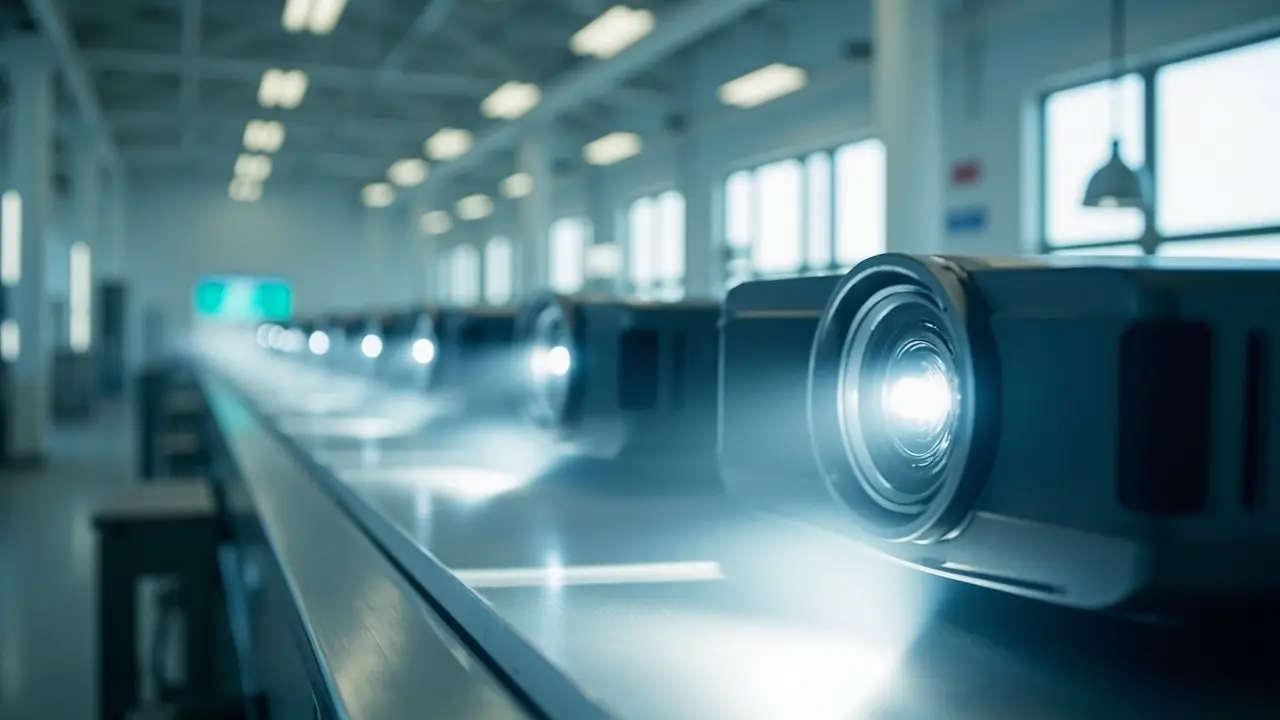
Battery Built-In Projector: Power Management for OEM
Battery built-in projectors are the fastest-growing segment of the portable projector market, enabling truly wireless operation for camping, travel, and casual use. For B2B buyers, battery built-in projector OEM requires careful attention to battery cell quality, BMS (Battery Management System), charging circuitry, and runtime testing. This guide explains what to specify and how to avoid common pitfalls.

Why Battery Matters
Battery is the most failure-prone component in portable projectors. Common battery-related issues:
- Reduced runtime after 6–12 months (cell degradation)
- Sudden shutdowns (BMS failure)
- Charging failures (charger or cell mismatch)
- Safety incidents (swelling, thermal runaway)
- Capacity loss in cold weather
Battery Cell Technology

Distributors evaluating the B2B projector market can reference our GP94A Android Smart Projector for Home Theater—a production-validated platform covering Android OS · Home Theater Reference, suitable as an OEM/ODM starting point.
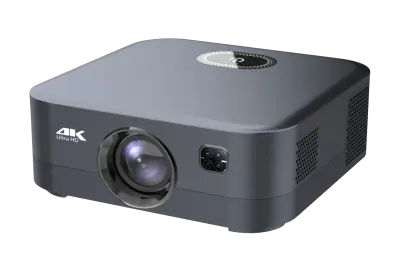
Distributors evaluating the B2B projector market can reference our GP94B 500ANSI Smart Projector for Hotels with Android 9—a production-validated platform covering 500 ANSI · Hotel-grade Android 9, suitable as an OEM/ODM starting point.
For projector applications, three Li-ion chemistries:
| Chemistry | Energy Density | Cycle Life | Safety | Cost |
|---|---|---|---|---|
| Li-ion (NMC) | High | 500–1,000 | Moderate | $ |
| Li-ion (LFP) | Moderate | 2,000+ | High | $$$ |
| LiPo | High | 300–500 | Low (swelling risk) | $$ |
Tier-1 Battery Cell Suppliers
For OEM buyers, specify tier-1 cells:
| Supplier | Country | Notes |
|---|---|---|
| CATL | China | World's largest battery maker |
| LG Energy Solution | Korea | Premium quality |
| Samsung SDI | Korea | Premium quality |
| BAK Battery | China | Tier-1 Chinese supplier |
| Eve Energy | China | Growing tier-1 |
| Murata | Japan | High quality, low volume |
| BYD | China | Lithium iron phosphate specialist |
Battery Capacity Sizing
Common battery capacities for portable projectors:
| Capacity | Wh | Runtime at 300 ANSI | Runtime at 500 ANSI |
|---|---|---|---|
| 40 Wh | 11,000 mAh @ 3.7V | 1.5–2 hours | 1–1.5 hours |
| 60 Wh | 16,200 mAh @ 3.7V | 2.5–3 hours | 1.5–2 hours |
| 80 Wh | 21,600 mAh @ 3.7V | 3.5–4 hours | 2–2.5 hours |
| 100 Wh | 27,000 mAh @ 3.7V | 4.5–5 hours | 3–3.5 hours |
| 120 Wh | 32,400 mAh @ 3.7V | 5–6 hours | 3.5–4 hours |
- Target retail price (battery is a major BOM cost)
- Target use case (camping vs casual)
- Target weight (larger battery = heavier)
Battery Management System (BMS)
The BMS protects the battery and manages charging/discharging:
Protection Functions
- Over-charge protection
- Over-discharge protection
- Over-current protection
- Short-circuit protection
- Temperature protection
- Cell balancing
- State of charge (SOC) estimation
Communication
- I2C / SMBus to main SoC
- Optional: Bluetooth for smartphone monitoring
- LED indicators for state of charge
- Texas Instruments (BQ series)
- Analog Devices
- Maxim Integrated
- Renesas
- NXP
Charging Architecture
Three charging methods to consider:
AC Adapter (Standard)
- 100–240V input, 19V/3.42A typical output (65W)
- 2–3 hours full charge
- Standard for most portable projectors
USB-C Power Delivery (PD)
- Modern fast charging standard
- 45W, 65W, 100W profiles
- 1–2 hours full charge at 65W
- Compatible with laptop chargers
Solar Charging
- 18V DC input
- 4–8 hours full charge with 100W panel
- Niche use case (camping, off-grid)
- Adds BOM cost
Runtime Testing
For OEM buyers, runtime testing is critical:
Test Procedure
- Charge battery to 100%
- Set projector to specified brightness (e.g., 300 ANSI)
- Set to eco mode if available
- Play continuous video content (e.g., local MP4)
- Record time from start to automatic shutdown
- Repeat 3 times, average results
Acceptance Criteria
- Runtime at 300 ANSI: ≥ 2.5 hours (for 60 Wh battery)
- Runtime at 500 ANSI: ≥ 2 hours (for 80 Wh battery)
- Runtime at full brightness: ≥ 1.5 hours
UN38.3 Certification
UN38.3 is the UN standard for lithium battery transport:
- Required for air transport
- Required for sea transport (some carriers)
- Tests include altitude simulation, thermal, vibration, shock, short circuit, impact, overcharge, forced discharge
Without UN38.3, batteries cannot be shipped by air — critical for fast delivery to global markets.
Field Failure Modes
Common battery field failures:
1. Capacity Loss Over Time
- Cells degrade with charge cycles
- After 500 cycles, capacity drops to ~80%
- After 1,000 cycles, capacity drops to ~70%
- Customer-visible: shorter runtime
2. BMS Failure
- Protection circuit fails
- Battery over-charges or over-discharges
- Can lead to swelling or thermal runaway
3. Cell Swelling
- Gas generation inside cell
- Visible bulge in battery pack
- Safety hazard
- Usually caused by overcharge or manufacturing defect
4. Cold Weather Performance
- Li-ion capacity drops in cold weather
- At 0°C, capacity may drop to 70%
- At -10°C, capacity may drop to 50%
BOM Cost Impact
| Component | BOM Cost |
|---|---|
| 60 Wh Li-ion battery (tier-1 cells) | $14–$22 |
| 80 Wh Li-ion battery (tier-1 cells) | $18–$28 |
| BMS IC + protection circuit | $1–$3 |
| Charging IC (USB-C PD) | $2–$5 |
| Battery housing | $1–$3 |
| Total battery subsystem | $20–$50 |
OEM Specification Checklist
When specifying battery for portable projectors:
BATTERY SPECIFICATION
Battery type: Li-ion (NMC)
Cell supplier: tier-1 (CATL, LG, Samsung SDI, BAK)
Capacity: ____ Wh
Nominal voltage: 7.2V (2S) or 11.1V (3S) or 14.4V (4S)
Cycle life: ≥ 500 cycles to 80% capacity
BMS protection: over-charge, over-discharge, over-current, short circuit, temperature
BMS IC: TI BQ / ADI / Maxim / Renesas / NXP
Charging: AC adapter (standard) + USB-C PD 45W+
Charging time: < 3 hours (AC), < 2 hours (USB-C PD 65W)
Operating temperature: 0–45°C
UN38.3 certification: required
Warranty: 12 months battery (or 500 cycles)
What We Recommend for Battery Built-In Projector OEM Buyers
- Specify tier-1 battery cells (CATL, LG, Samsung SDI, BAK)
- Use reputable BMS ICs (TI, ADI, Maxim)
- USB-C PD charging at 45W+ for modern compatibility
- UN38.3 certification mandatory for global shipping
- Runtime testing in sample evaluation (≥ 2.5 hours at 300 ANSI)
- 12-month battery warranty as standard
- Insulated battery compartment for cold weather operation
Conclusion
Battery built-in projector OEM requires careful attention to cell quality, BMS design, charging, and testing. Skip any of these and field failures will destroy your brand reputation. Invest in tier-1 cells and proven BMS, and verify with testing.
💼 Need battery built-in projector OEM service?
Request a Free Quote | View Product Catalog
We ship portable projectors with tier-1 battery cells, USB-C PD charging, and UN38.3 certification. Engineering team will recommend the right battery configuration within 24 hours.
