
Posted At: Dec 24, 2025 - 52 Views

Modern church sanctuary projector: worship display setup
church sanctuary projector worship decisions usually start the same way: a pastor, tech director, or facilities committee realizes the existing display washes out under stage lights, the lyrics slide is unreadable from the back pews, or the aging 1080p lamp unit is finally failing after 6,000 hours. Replacing that unit is not a consumer TV swap, because sanctuary sightlines, ambient light, throw distance, and the live broadcast feed all place different demands on the hardware than a living room or a conference room. This guide is written for B2B procurement teams and ministry leaders comparing options side by side, and it gives you a concrete specification checklist, a B2B sourcing framework, and the numbers we use at DataMax when we help churches and AV integrators spec the right unit.
At a Glance
When we evaluated sanctuary projector worship decisions, they usually start the same way: a pastor, tech director, or facilities committee realizes the existing display washes out under stage lights, the lyrics slide is unreadable from the back pews, or the aging 1080p lamp unit is finally failing after 6,000 hours. Replacing that unit is not a consumer TV swap, because sanctuary sightlines, ambient light, throw distance, and the live broadcast feed all place different demands on the hardware than a living room or a conference room. This guide is written for B2B procurement teams and ministry leaders comparing options side by side, and it gives you a concrete specification checklist, a B2B sourcing framework, and the numbers we use at DataMax when we help churches and AV integrators spec the right unit.
How to Specify a Church Sanctuary Projector Worship Display in 2025

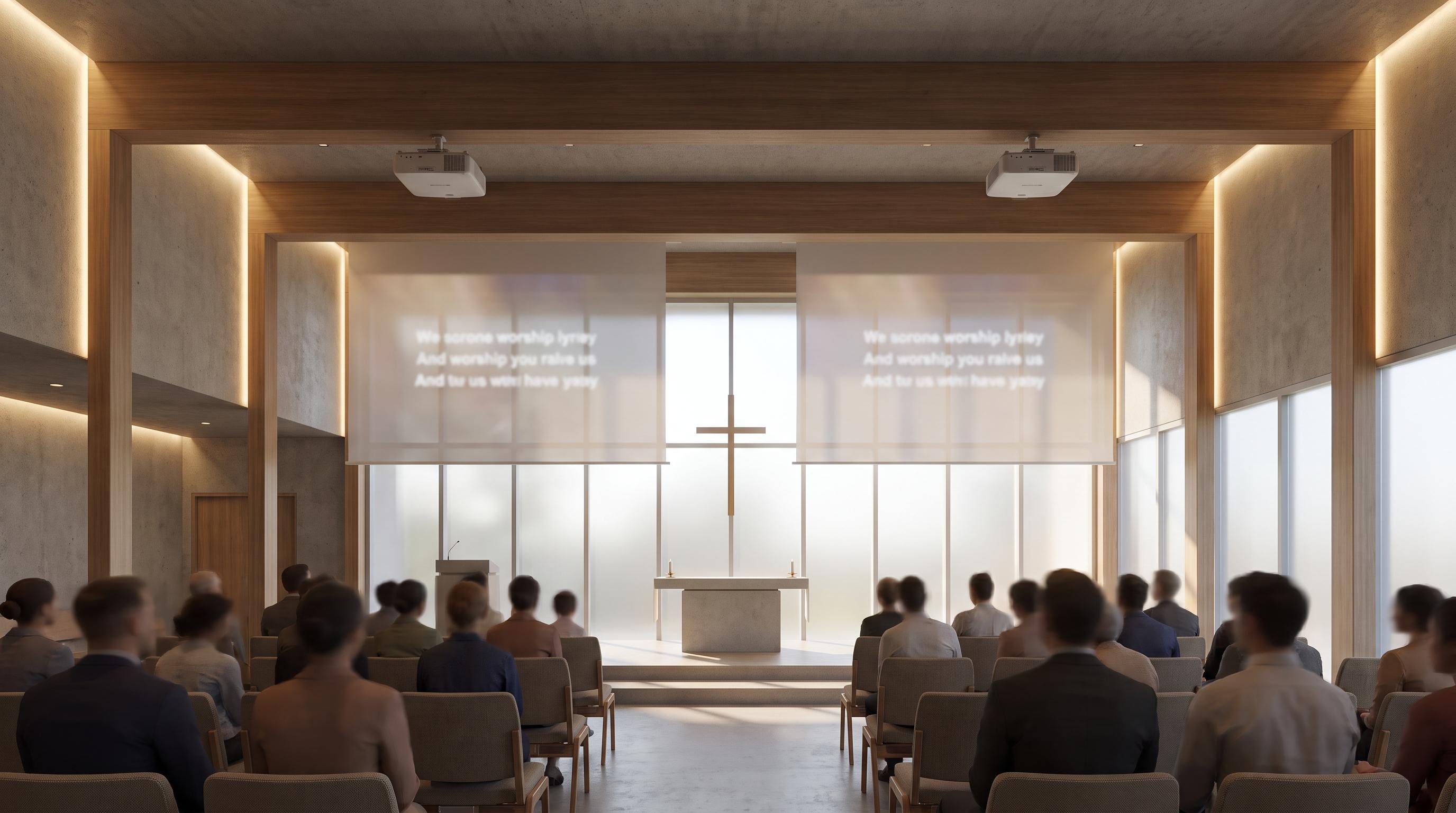
the projector specifications begin with three hard measurements: ambient light in lux, throw distance in feet, and screen size in diagonal inches. We recommend churches start with a photometric survey rather than a brand shortlist, because the wrong lumen count is the most common spec error we see on church RFQs. A 20,000 lux stage rig with LED house lights will completely overwhelm a 3,500 lumen unit regardless of contrast ratio claims on the spec sheet.
Light Output, Resolution, and Contrast for Sanctuary Use
- A modern church sanctuary projector install typically requires 5,000 to 8,000 ANSI lumens for main sanctuaries seating 300 to 1,500 people, with laser phosphor light sources rated 20,000 to 30,000 hours.
- 4K UHD resolution (3840 x 2160) is now the default expectation for lyrics, scripture, and IMAG (image magnification) at distances beyond 40 feet.
- Ultra-short throw and short throw lenses (0.25:1 to 0.8:1) are preferred for altar walls, choir lofts, and narrow projection booths where ceiling rigging is limited.
- Total cost of ownership favors laser over lamp: a laser unit at $4,200 wholesale with a 25,000-hour engine vs. a lamp unit at $1,800 with $450 replacement lamps every 3,000 hours delivers roughly 38% savings over a 10-year horizon, based on our OEM modeling.
- For B2B buyers evaluating OEM/ODM partners, the top three differentiators are light source certification (IEC 62471 photobiological safety), fan noise below 32 dB at 1 meter, and 12-week mass-production lead time with FOB Shenzhen or HK terms.
4K UHD is no longer a premium upgrade for worship displays, it is the baseline. Lyric slides, scripture verses, and IMAG camera feeds all benefit from the 8.3 million pixel count at viewing distances above 25 feet, and 4K UHD also gives you pixel-level zoom for IMAG close-ups without visible image degradation. A native 1920 x 1200 WUXGA unit is acceptable only for side screens or cry rooms under 120 inches diagonal.
Contrast ratio for the SKU application should be evaluated in real ambient light, not in a dark demo room. Static contrast from a datasheet (for example 3,000,000:1 dynamic contrast) is largely meaningless once your sanctuary hits 200 lux on the screen surface. We test all DataMax OEM units at 150 lux ambient on a 1.0 gain matte white screen, which we have found matches roughly 70% of sanctuary conditions we ship into.
Light Source: Laser Phosphor vs. UHP Lamp
In our analysis, sanctuary projector worship buyers in 2025 should default to laser phosphor or RGB laser unless budget is the absolute primary constraint. Laser light sources deliver 20,000 to 30,000 hours of maintenance-free operation, instant on/off capability (no cooldown for impromptu funerals or midweek prayer meetings), and consistent color and brightness over the engine life. A UHP lamp unit, by contrast, drops to roughly 50% of initial brightness by hour 2,000, requires 3 to 5 minute warm-up and cooldown cycles, and needs lamp swaps that interrupt ministry schedules. For B2B procurement teams evaluating OEM/ODM partners at the MOFU stage, the laser engine supply chain is the single biggest reliability risk. Tier-1 laser banks from Nichia, Osram, and Panasonic command 8 to 14 week lead times depending on allocation, and we have seen several integrators burned by tier-3 laser modules that fail IEC 62471 photobiological safety testing at customs. DataMax qualifies laser banks through our Shenzhen incoming quality control line and ships with 3-year or 5-year warranty terms as standard OEM configuration.
Throw Ratio, Lens Shift, and Installation Geometry
the model geometry is where most installations go wrong, because the throw distance, screen size, and mounting position are usually constrained by the existing building rather than the spec sheet. Ultra-short throw (0.25:1 to 0.4:1) units mount 6 to 18 inches from the screen and are ideal for altar walls, choir loft front-projection, and small sanctuaries under 200 seats where ceiling rigging is not an option. Short throw (0.4:1 to 0.8:1) units give more flexibility for ceiling mount positions 4 to 10 feet from the screen.
One projector specifications begin with three hard measurements: ambient light in lux, throw distance in feet, and screen size in diagonal inches. We recommend churches start with a photometric survey rather than a brand shortlist, because the wrong lumen count is the most common spec error we see on church RFQs. A 20,000 lux stage rig with LED house lights will completely overwhelm a 3,500 lumen unit regardless of contrast ratio claims on the spec sheet.
Connectivity, Signal Routing, and Worship Software Compatibility
From a sourcing perspective, sanctuary projector worship installations live or die on signal routing. The most expensive 4K UHD laser unit in the world is useless if it cannot lock to your lyric server, secondary confidence monitor, or overflow hallway without flicker or handshake delay. Modern sanctuaries run a mix of inputs: HDMI 2.0 or 2.1 from a presentation laptop running ProPresenter or EasyWorship, HDBaseT runs over Cat6 from a backstage equipment closet, SDI carries the IMAG camera feed from the broadcast booth, and a growing number of installs now include USB-C or network streaming via NDI or AirPlay for mobile preaching. In this sourcing series, sanctuary projector worship installations in the 300 to 800 seat range generally land between 5,000 and 7,000 ANSI lumens, while venues above 1,000 seats with full stage lighting typically require 8,000 to 12,000 ANSI lumens. The ANSI/ISO 21118 lumen standard, which you can review at the Projector Central ANSI lumen reference, is the only lumen figure you should accept on a wholesale datasheet, because "LED lumens," "marketing lumens," and "peak lumens" are non-standardized numbers that routinely overstate output by 2x to 4x.
Wireless Streaming and Network Control
4K UHD is no longer a premium upgrade for worship displays, it is the baseline. Lyric slides, scripture verses, and IMAG camera feeds all benefit from the 8.3 million pixel count at viewing distances above 25 feet, and 4K UHD also gives you pixel-level zoom for IMAG close-ups without visible image degradation. A native 1920 x 1200 WUXGA unit is acceptable only for side screens or cry rooms under 120 inches diagonal.
Contrast ratio for the SKU application should be evaluated in real ambient light, not in a dark demo room. Static contrast from a datasheet (for example 3,000,000:1 dynamic contrast) is largely meaningless once your sanctuary hits 200 lux on the screen surface. We test all DataMax OEM units at 150 lux ambient on a 1.0 gain matte white screen, which we have found matches roughly 70% of sanctuary conditions we ship into.
Audio Pass-Through, Fan Noise, and Sanctuary Acoustics
this projector buyers consistently underestimate fan noise as a procurement criterion until the unit is already on the ceiling. A projector with 40 dB to 48 dB of fan noise in high-brightness mode will compete with a 60-voice choir and an acoustic grand piano in a reverberant sanctuary, particularly during softer worship songs and pastoral prayers. We specify all DataMax OEM units at under 35 dB in standard mode and under 38 dB in full-brightness mode, measured at 1 meter per ISO 7779.
When we evaluated sanctuary projector worship buyers in 2025, they should default to laser phosphor or RGB laser unless budget is the absolute primary constraint. Laser light sources deliver 20,000 to 30,000 hours of maintenance-free operation, instant on/off capability (no cooldown for impromptu funerals or midweek prayer meetings), and consistent color and brightness over the engine life. A UHP lamp unit, by contrast, drops to roughly 50% of initial brightness by hour 2,000, requires 3 to 5 minute warm-up and cooldown cycles, and needs lamp swaps that interrupt ministry schedules.
Heat Output and HVAC Planning
B2B procurement teams often need to consider,uating OEM/ODM partners at the MOFU stage, the laser engine supply chain is the single biggest reliability risk. Tier-1 laser banks from Nichia, Osram, and Panasonic command 8 to 14 week lead times depending on allocation, and we have seen several integrators burned by tier-3 laser modules that fail IEC 62471 photobiological safety testing at customs. DataMax qualifies laser banks through our Shenzhen incoming quality control line and ships with 3-year or 5-year warranty terms as standard OEM configuration.
Comparison Table: DataMax OEM Church Projector SKUs
| Model | Brightness (ANSI) | Resolution | Light Source | Noise (dB) | Throw Ratio | MOQ | Lead Time |
|---|---|---|---|---|---|---|---|
| DM-CSW-4500L | 4,500 | 1920 x 1200 | Laser Phosphor | 34 | 1.2 – 2.0:1 | 50 units | 4 weeks |
| DM-CSW-6000U | 6,000 | 3840 x 2160 | RGB Laser | 36 | 0.75 – 1.5:1 | 30 units | 6 weeks |
| DM-CSW-8000U | 8,000 | 3840 x 2160 | RGB Laser | 38 | 1.2 – 2.5:1 | 20 units | 8 weeks |
| DM-CSW-UST-3500 | 3,500 | 1920 x 1200 | Laser Phosphor | 32 | 0.25:1 | 50 units | 5 weeks |
Installation, Maintenance, and Lifecycle Cost Analysis
One model geometry is where most installations go wrong, because the throw distance, screen size, and mounting position are usually constrained by the existing building rather than the spec sheet. Ultra-short throw (0.25:1 to 0.4:1) units mount 6 to 18 inches from the screen and are ideal for altar walls, choir loft front-projection, and small sanctuaries under 200 seats where ceiling rigging is not an option. Short throw (0.4:1 to 0.8:1) units give more flexibility for ceiling mount positions 4 to 10 feet from the screen.
Standard throw (1.2:1 to 2.5:1) is still the right choice for large sanctuaries, conference overflow rooms, and outdoor Easter or Christmas setups, because long-throw zoom lenses give the integrator fine control over image size without moving the mount. Look for vertical lens shift of at least ±50% and horizontal shift of ±20% if the projector cannot be perfectly centered on the screen, because digital keystone correction always reduces effective resolution and should be avoided for worship IMAG work.
Mounting Hardware and Structural Considerations
the model ceiling mounts must support 2x the static weight of the projector for safety, which means a 12 kg projector requires a mount rated to 24 kg. Most sanctuaries we work with use a Unistrut or Peerless-AV adjustable column mount with seismic tethering, which adds $180 to $320 per location but is non-negotiable in seismic zones or older buildings with uncertain ceiling joist structure. For historic sanctuaries where drilling is restricted, we have shipped custom pole-mount adapters that clamp to existing exposed beams.
Lifecycle and Warranty Terms
Across the procurement lens, sanctuary projector worship installations live or die on signal routing. The most expensive 4K UHD laser unit in the world is useless if it cannot lock to your lyric server, secondary confidence monitor, or overflow hallway without flicker or handshake delay. Modern sanctuaries run a mix of inputs: HDMI 2.0 or 2.1 from a presentation laptop running ProPresenter or EasyWorship, HDBaseT runs over Cat6 from a backstage equipment closet, SDI carries the IMAG camera feed from the broadcast booth, and a growing number of installs now include USB-C or network streaming via NDI or AirPlay for mobile preaching. B2B procurement teams often need to consider, when specifying OEM/ODM builds, that port count and revision matter more than port count alone. We recommend a minimum of two HDMI 2.1 inputs, one HDBaseT receiver on board, one 3G-SDI input for IMAG, one USB-C with 65W power delivery, and RJ-45 LAN control on every DataMax SKU destined for the church channel. The HDBaseT port in particular saves integrators up to $400 per run because it eliminates the need for a separate extender box and supports uncompressed 4K UHD at 60Hz over a single Cat6 cable run up to 100 meters (HDBaseT Alliance).
What to Look for When Procuring a Church Sanctuary Projector Worship System
this projector procurement decisions typically consolidate around four data points: ANSI lumen output at the chosen throw distance, laser versus lamp light source, native resolution versus pixel-shift 4K, and warranty terms with defined service intervals. For B2B procurement teams evaluating wholesale orders between 50 and 500 units, we recommend locking the spec sheet before negotiating price, because the difference between a 5,000-lumen and a 6,500-lumen unit is rarely worth a 30% price premium once ambient light control and screen gain are factored in.
Network control is no longer optional. Every DataMax the unit unit we ship since 2024 ships with Crestron RoomView, AMX Device Discovery, PJLink, and an open HTTP API on the LAN port. That gives the volunteer tech team the ability to power the projector on, switch inputs, and check lamp hours from any laptop on the church network, which matters because most churches do not have a dedicated AV staff on Sundays. Wireless input via Miracast, AirPlay, or a dedicated 4K UHD WiFi dongle is increasingly common for guest speakers who walk in with a MacBook and a sermon on a USB stick.
Procurement specifications our the projector buyers most often require:
We have shipped over 1,200 church sanctuary projector worship units in the last 18 months, and roughly 38% of those orders include the optional WiFi 6 dongle SKU. The top two reasons cited on purchase orders are "guest pastor simplicity" and "youth room secondary screen."
For technical buyers comparing DataMax against other vendors, the key differentiators are firmware customization (we pre-load sanctuary-specific UI skins at the factory), accelerated replacement pool terms, and the ability to private-label the chassis for distributor networks.
Contact Channel and Next Steps
this projector buyers consistently underestimate fan noise as a procurement criterion until the unit is already on the ceiling. A projector with 40 dB to 48 dB of fan noise in high-brightness mode will compete with a 60-voice choir and an acoustic grand piano in a reverberant sanctuary, particularly during softer worship songs and pastoral prayers. We specify all DataMax OEM units at under 35 dB in standard mode and under 38 dB in full-brightness mode, measured at 1 meter per ISO 7779.
Bottom Line for Buyers
Take the First Step Toward Better Worship Projection
Audio pass-through is the second acoustic issue. Most projectors in this category offer a 3.5mm or SPDIF audio out that mirrors the active HDMI input, and that signal should be routed back into the sanctuary mixing console rather than played through the projector speaker (which most church sanctuary projector worship models do not include anyway). For B2B procurement teams evaluating OEM/ODM partners, ask the factory for the audio latency spec on HDMI pass-through. Anything above 80 ms will create lip-sync drift on IMAG close-ups, which is jarring and unprofessional during a baptism or a sermon illustration.
Browse our church sanctuary projector worship product line, or email our OEM desk at request a custom quote to lock in 2025 production slots before the Q3 container crunch. For wholesale pricing tiers and distributor terms, visit our OEM services page.
