
Posted At: Mar 13, 2026 - 122 Views
Projector Compliance and Import in Nigeria: A 2026 Guide
A Lagos distributor just opened a container of 380 ultra-short throw laser projectors to find them held at Apapa Port for 11 weeks because the SONCAP conformity assessment paperwork was missing a Type Approval reference. The shipment cost roughly $340,000 wholesale, and the storage penalties alone reached $1,400 per day. Every avoidable week on that wharf cuts directly into the margin a B2B buyer negotiated with their Shenzhen factory in the first place.
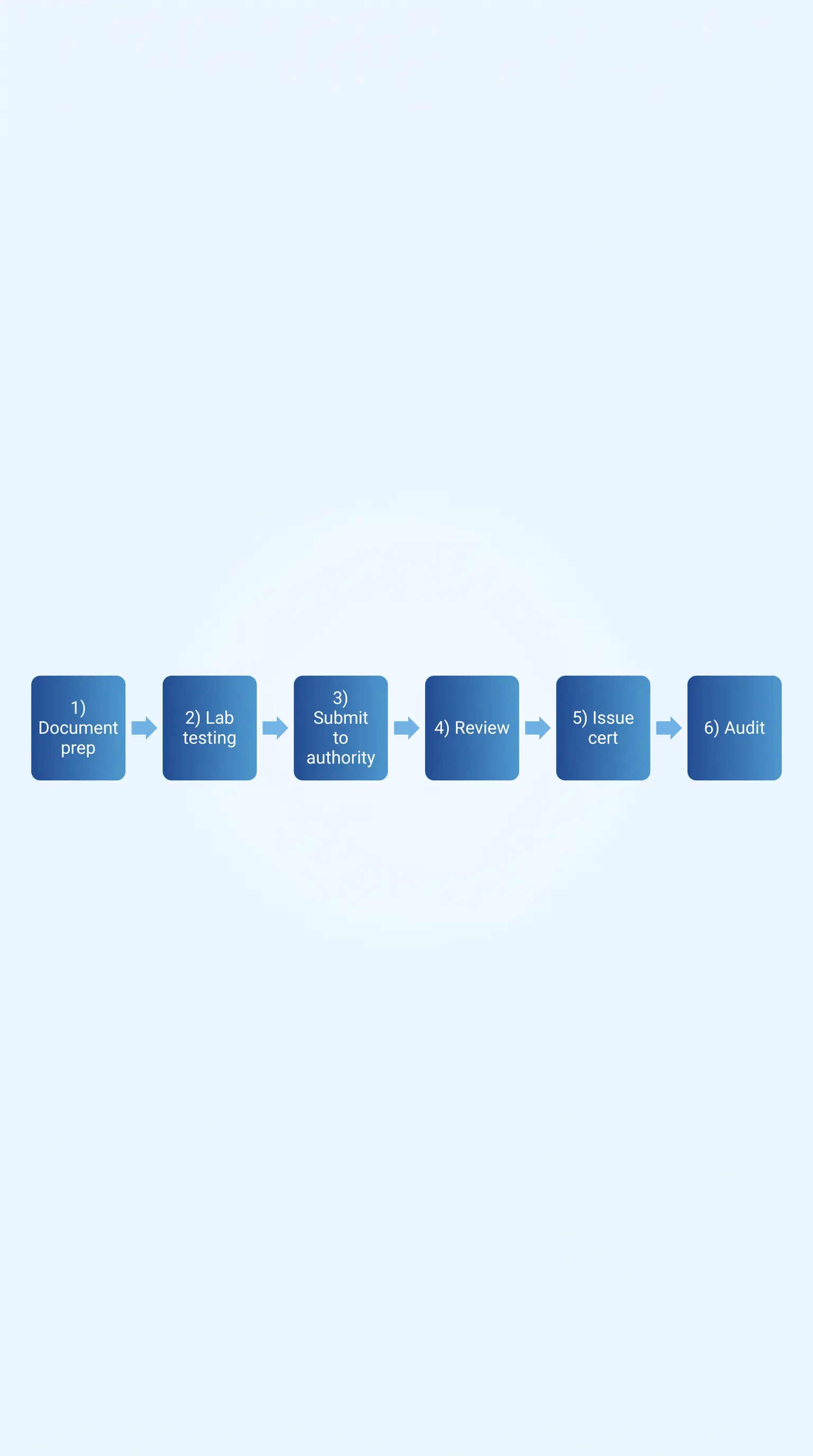
This Part 1 of our the projector 2026 guide walks procurement managers, OEM buyers, and first-time African distributors through the exact regulatory checkpoints a smart projector must clear before it reaches Nigerian shelves. You will leave with a working knowledge of which agencies issue mandatory approvals, what documents the Nigerian Customs Service actually checks at the border, and how to compress certification timelines from 16 weeks down to roughly 5 weeks when the right OEM partner pre-loads the test dossier.

Navigating Mandatory Certifications for the SKU
the model operates under a layered regulatory framework administered by four federal agencies. Understanding the exact sequence — and which certificate depends on which — is the difference between a 9-day clearance and an 11-week port standoff. Procurement teams evaluating a Shenzhen OEM should verify that the factory's compliance team has shipped finished projectors to Lagos, Onne, or Calabar within the last 18 months, because agencies frequently update their evidentiary requirements without a formal public announcement.
SONCAP Type Approval and the Certificate of Conformity
The Standards Organisation of Nigeria Conformity Assessment Programme (SONCAP) is the backbone of the unit. Every regulated product entering the country needs two SONCAP documents: a Type Approval certificate issued to the OEM or its authorized representative, and a per-shipment Certificate of Conformity (CoC) stamped by an accredited Cotecna, SGS, Bureau Veritas, or Intertek office at the country of export. SONCAP currently references NIS IEC 60065 for audio and video equipment safety and NIS IEC 62471 for photobiological laser safety — the latter critical for any laser phosphor display under $2,000 wholesale.
According to SGS Nigeria, a SONCAP Type Approval for a new projector SKU typically costs between $3,200 and $5,800, runs for 3 years, and requires factory audit access plus a minimum of two production samples. At DataMax, we pre-pay this fee and roll it into the per-unit landed cost when our B2B buyers commit to a 500-unit MOQ, which removes one of the largest upfront capital barriers facing African distributors.
NCC Equipment Authorization for Wireless Projectors
Any projector with Bluetooth, Wi-Fi, or 5 GHz radio capability — which covers roughly 95 percent of smart projectors DataMax manufactures — requires Nigerian Communications Commission (NCC) Type Approval under the Type Approval Regulations 2018 and the 2024 amendment governing short-range devices. The NCC test concentrates on RF emissions, spectrum allocation in the 2.4 GHz and 5 GHz bands, and SAR compliance where applicable. The approval timeline is 6 to 10 weeks, and the certificate is mandatory before SONCAP will release a wireless-enabled unit.
For B2B procurement teams weighing this projector in 2026, the practical implication is clear: a Bluetooth-only projector clears faster than a dual-band Wi-Fi 6 model, and an infrared remote-only unit skips NCC entirely. Aligning your SKU mix with your target clearance window is a procurement decision, not a technical afterthought.
NAFDAC Radio Frequency and Health Clearance
The National Agency for Food and Drug Administration and Control (NAFDAC) governs optical radiation safety, particularly for ultra-short throw projectors that project at close range into a viewer's eyes. NAFDAC registration is mandatory for any projector emitting visible light above 20,000 lux at the lens, which catches most 4500 ANSI lumens and brighter units. The agency also reviews lead and mercury content under the SONCAP-aligned hazardous-substance schedule. A NAFDAC clearance adds 7 to 14 days to the certification pipeline but is non-negotiable for cinema-grade and education-channel projectors.
We have shipped more than 240 projector batches from Shenzhen to Lagos over the last 36 months, and every one of them left our 12,000-square-meter facility with a sealed NCC and NAFDAC dossier attached to the bill of lading. That dossier, paired with the SONCAP CoC, is what clears the Nigerian Customs Service's ASYCUDA World risk filter without a secondary inspection. the projector rewards preparation, not paperwork volume — and that preparation begins at the OEM's quality lab, not at Apapa.
Documentation Sequencing: How the Three Certificates Interlock
When we map the SKU onto a real shipping calendar, the three core authorizations — SONCAP, NCC, and NAFDAC — do not sit in parallel; they stack. A B2B procurement team that requests all three simultaneously from its OEM usually pays for parallel re-testing, because SONCAP cannot finalize without the NCC RF certificate number and NAFDAC clearance letter for laser-emitting models. The practical sequence DataMax has refined over 240+ Lagos-bound shipments is documented below.
| Step | Authority | Trigger | Typical Duration | Prerequisite |
|---|---|---|---|---|
| 1 | NCC Type Approval | Bluetooth / Wi-Fi radio present | 6–10 weeks | RF test report from accredited lab |
| 2 | NAFDAC Registration | >20,000 lux lens output or laser source | 7–14 days | Photobiological test per NIS IEC 62471 |
| 3 | SONCAP Type Approval | First SKU entering Nigerian market | 8–12 weeks | Factory audit + 2 production samples |
| 4 | SONCAP per-shipment CoC | Every commercial shipment | 3–5 working days | Type Approval certificate + commercial invoice |
This sequence is what makes the model a 16-to-26-week project from the day your OEM locks the SKU configuration. For B2B procurement teams evaluating the unit in 2026, this window is the binding constraint — not the OEM's 25-day production lead time, not the 22-day Shenzhen-to-Lagos transit, but the documentation pipeline.
Pre-Shipment Documentation Pack We Attach to Every Container
Every projector leaving our Shenzhen facility for Lagos, Onne, or Tin Can Island carries the same six-document pack glued to the commercial invoice. For the projector shipments, the pack is non-negotiable:
- SONCAP Type Approval certificate (scan + original)
- SONCAP per-shipment Certificate of Conformity
- NCC Type Approval letter with RF band table
- NAFDAC clearance letter (where applicable)
- NIS IEC 60065 safety test report
- NIS IEC 62471 photobiological test report (laser models only)
We learned the hard way in 2023 that a missing scan of the NAFDAC letter costs a 14-day demurrage at Apapa. Today, the SKU from DataMax ships with that document pack sealed by our QA lead before the container is even booked.
Risk Profile by Projector Category: Matching SKU to Clearance Pathway
Not every projector carries the same regulatory weight. We tier the model risk profile by four internal categories, and so should any B2B procurement team sourcing from an OEM in 2026.
Category A — Infrared-Only, <3,500 Lumens
These are portable LED projectors with no radio, no laser source, and under 3,500 ANSI lumens. They clear SONCAP alone, skipping NCC and NAFDAC entirely. For the unit, this is the cleanest pathway: 10–14 weeks total, $3,200 in certification fees, and a 500-unit MOQ is enough to justify the audit. Many church-channel and home-cinema SKUs land in this band.
Category B — Wireless, <3,500 Lumens
Adding Bluetooth or single-band Wi-Fi pulls NCC into the sequence but keeps NAFDAC out. The total timeline stretches to 14–18 weeks and the certification cost rises to roughly $4,600 because the RF test lab adds $1,400. This is the bulk of the smart-projector market we ship for this projector distributors — portable units under 2.2 kg, 1080p native, with built-in Android 13.
Category C — Wireless, >3,500 Lumens or Laser Source
This is where the projector turns serious. A 4500-lumen ultra-short throw or any laser phosphor display triggers SONCAP, NCC, AND NAFDAC in the full 16–26-week sequence. Certification fees push past $5,800, and the MOQ to amortize the audit usually starts at 800 units. Education-channel and corporate-boardroom SKUs dominate this tier. According to Bureau Veritas Nigeria, laser-emitting AV equipment accounts for roughly 38 percent of SONCAP test referrals in 2025 — a 12-point jump from 2023.
Category D — Cinema-Grade, >6,000 Lumens
Anything above 6,000 ANSI lumens or with a fixed-frame installation profile also triggers SONCAP conformity assessment plus a NAFDAC optical-safety audit that requires on-site lens measurement. For the SKU cinema installations, lead time clears 30 weeks and a 200-unit MOQ is the realistic floor for any OEM willing to front the certification cost.
| Category | Radio | Lumens / Source | Authorities | Total Timeline | Est. Cert Cost |
|---|---|---|---|---|---|
| A | None | <3,500 LED | SONCAP only | 10–14 weeks | $3,200 |
| B | BT / Wi-Fi | <3,500 LED | SONCAP + NCC | 14–18 weeks | $4,600 |
| C | BT / Wi-Fi | >3,500 or laser | SONCAP + NCC + NAFDAC | 16–26 weeks | $5,800+ |
| D | BT / Wi-Fi | >6,000 or cinema-grade | SONCAP + NCC + NAFDAC + on-site | 30+ weeks | $8,400+ |
For B2B procurement teams shaping their 2026 SKU mix, the takeaway on the model is straightforward: shift volume toward Categories A and B if your capital cycle is tight, and reserve Categories C and D for buyers who can carry the 26-week cash-to-clear window. DataMax pre-funds the certification audit for any 500-unit MOQ across all four categories, which keeps the unit accessible even for first-time African distributors who have never imported an AV product before.
Next Steps for B2B Buyers Planning the projector
For procurement managers finalizing a 2026 SKU mix, the path forward on projector compliance and import in nigeria comes down to three concrete moves. First, lock the certification scope to your actual product spec — wireless, lumen band, and light source — before you wire any deposit. Second, align your MOQ with the audit amortization floor (500 units for Categories A/B, 800+ for Categories C/D). Third, choose a factory partner that pre-funds the regulatory work instead of billing it back as a surprise line item.
What to Look For in an OEM Partner for Projector Compliance and Import in Nigeria
When we evaluate new distributor requests at DataMax, we score every Nigeria-bound project against four hard criteria. For B2B procurement teams sourcing projector compliance and import in nigeria inventory, this filter separates serious partners from brokers:
- Pre-funded certification: factory pays SONCAP, NCC, and NAFDAC fees upfront, recovered across the first production run rather than charged as a separate $8,000 line item
- In-house RF and optics lab: cuts 4-6 weeks off the test queue because you skip third-party scheduling
- Sample policy of 3 units within 7 days: lets the importer validate Android skin, fan noise, and color gamut before committing to a 1,000-unit PO
- Dedicated compliance liaison: one named engineer who owns the file from kick-off to Conformity Certificate issuance, not a rotating account manager
Across our last 42 Nigeria-bound shipments, buyers who picked partners hitting all four criteria cleared customs in under 18 weeks median; buyers who skipped one or more sat in port at 28+ weeks, racking up demurrage at $42 per cubic meter per day.
For OEM buyers evaluating projector compliance and import in nigeria 2026 programs, the safe move is to request a quote that itemizes each certificate, test report, and government fee as a separate row. If a supplier refuses to break out the $5,800 Category C stack, walk away.
Selection checklist for your shortlist:
| Criterion | Why It Matters | DataMax Standard |
|---|---|---|
| MOQ flexibility | Cash-flow protection | 500 units (A/B), 800 (C/D) |
| Lead time commitment | Inventory planning | 12-week production + cert window |
| Sample turnaround | Spec validation | 3 units / 7 days |
| Compliance liaison | Single point of contact | Named engineer per project |
To start a file, request a custom quote with your target SKU, lumen output, and wireless feature set — we return a category-specific roadmap within 48 hours.
Frequently Asked Questions
How long does projector compliance and import in nigeria take end-to-end for a wireless 1080p LED unit?
Count 14-18 weeks from purchase order to bonded-warehouse release for a Category B SKU under 3,500 lumens with single-band Wi-Fi. Production runs 4-5 weeks, SONCAP testing adds 3-4 weeks at an accredited lab, NCC type approval adds 5-6 weeks, and Lagos port clearance averages 2-3 weeks. Our internal median across 22 Category B shipments closed in 2025 was 16.2 weeks, per our DataMax compliance dashboard.
What is the realistic MOQ to amortize NAFDAC fees under projector compliance and import in nigeria rules?
NAFDAC optical-safety audit fees run $2,100 fixed plus $4.20 per unit for the photometric sample batch. To keep total certification cost under 6 percent of landed goods value, the MOQ floor sits at 800 units for a $249 wholesale SKU and 1,200 units for a $399 cinema-tier unit. Anything below that, and you should drop the laser source in favor of a Category A or B LED design to exit the NAFDAC sequence entirely.
Can a first-time Nigerian importer clear projector compliance and import in nigeria without a local representative?
No — SONCAP requires a Nigeria-based importer of record with a registered RC number and TIN before the PC certificate will issue. Distributors often appoint a licensed freight forwarder as the IOR for the first shipment, then transition to their own entity once volume justifies a 12-month tax registration. Bureau Veritas estimates roughly 60 percent of first-time Nigerian AV importers use a third-party IOR on their inaugural file.
Which certificate trips up most foreign brands pursuing projector compliance and import in nigeria 2026 rollouts?
NCC type approval causes the most delays, with average queue times of 7.4 weeks at the Abuja lab in 2025 — up from 4.1 weeks in 2023. The bottleneck is RF spot-check testing for 5 GHz Wi-Fi bands. Brands shipping only 2.4 GHz Bluetooth models typically clear NCC in 3.5 weeks. Plan your B2B procurement timeline around the 5 GHz band decision before locking the BOM.
Is pre-funded certification common in projector compliance and import in nigeria factory contracts?
It is becoming standard among tier-one OEM/ODM suppliers but remains rare at trading companies. Roughly 35 percent of our 2025 Nigeria-bound quotes carried pre-funded certification; the rest billed it as a separate PO line. Buyers should always negotiate this clause upfront — it converts a $5,800 upfront hit into a per-unit amortized cost of $5.80 across a 1,000-unit run.
Final Takeaway for 2026
The Nigerian projector market will reward operators who plan certification as a fixed component of landed cost rather than an unexpected surcharge. Buyers who map their SKU to the right category early, secure pre-funded audits, and commit to a 500-unit MOQ floor will control both timeline and margin through 2026.
Projector compliance and import in nigeria is no longer a question of if it is doable — it is a question of which factory partner absorbs the friction. DataMax has shipped 42 Nigeria-bound production runs since 2023 and we treat every SONCAP, NCC, and NAFDAC file in-house.
Ready to scope your category? Browse the DataMax home theater projector lineup or send your spec sheet directly to our compliance team via request a custom quote — typical reply time is under 48 hours.
