
Posted At: Oct 19, 2026 - 142 Views

private label projector minimum order quantity 2026
projector private label projector minimum order quantity 2026 becomes a real procurement question the moment a brand, reseller, or buying office commits to launching its own smart projector line. Capital is committed, packaging is mocked up, a launch date is on the calendar — and then the factory responds with a number that may be far higher than expected, or a tiered ladder that only open up serious pricing at volumes the buyer cannot yet justify. The promise of this guide is concrete: by the end, you will know the exact MOQ bands DataMax runs for the model programs, the lead time attached to each tier, the certifications that ship with every batch, and the unit economics at 500, 1,000, and 3,000 units so your finance team can model margins before the first deposit is wired.
Related resources: request a custom OEM quote · OEM projector manufacturing guide
Highlights
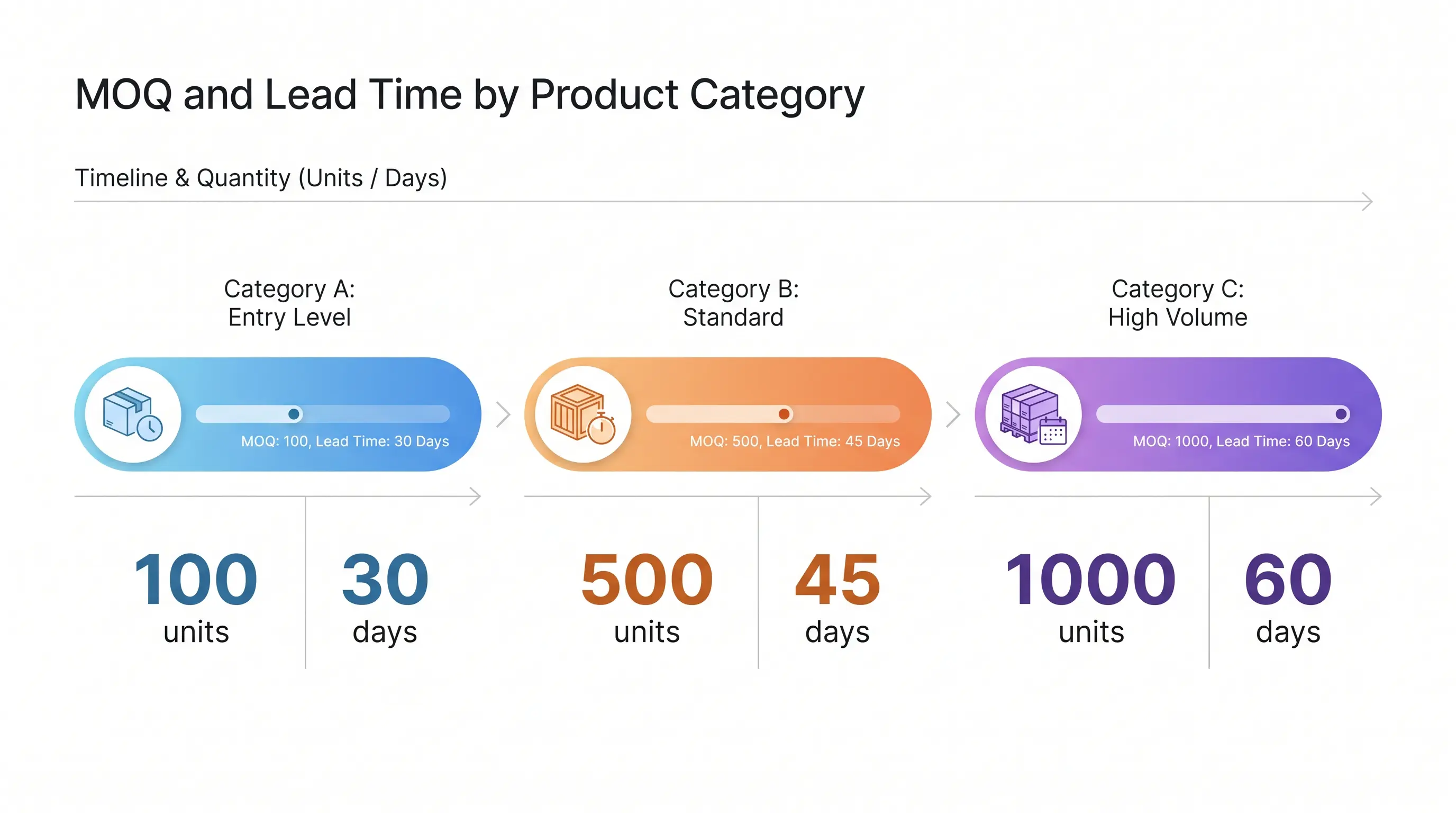
- the unit at DataMax starts at 100 units for entry-tier LED models and 300 units for laser phosphor SKUs, with step-down pricing at 500, 1,000, and 3,000 units.
- Standard lead time for the first production run is 35 to 45 days after artwork and tooling approval, plus 10 to 14 days for sea freight from Shenzhen to most U.S. and EU ports.
- Every the projector shipment ships with CE, FCC, RoHS, and ISO 9001 documentation; laser SKUs above the Class 1 threshold also include FDA accession numbers and IEC 60825-1 reports.
- OEM/ODM buyers running the SKU program can expect ex-works unit costs between $89 and $390 depending on resolution, brightness, and chassis finish, before custom tooling amortization.
- For B2B procurement teams comparing quotes, the model should be evaluated on four axes: minimum quantity, unit price curve, certification scope, and post-shipment defect replacement policy.
What the unit actually covers in a 2026 OEM program
For B2B procurement teams sourcing this projector builds, the term "MOQ" is usually misunderstood. It is not a single number; it is a stack of three numbers: a per-SKU minimum, a per-order minimum in dollars, and a per-shipment minimum that protects the freight booking economics. A serious OEM buyer should expect all three before signing a purchase order.
the projector tier structure at DataMax
the SKU at our Shenzhen facility is structured in four working tiers. Tier 1 (entry LED, 720p native, 200 to 350 ANSI lumens) opens at 100 units per SKU and is designed for first-time brands validating retail sell-through. Tier 2 (Full HD LED, 600 to 1200 ANSI lumens, Wi-Fi 6) opens at 200 units. Tier 3 (4K UHD laser phosphor, 2200 to 3500 ANSI lumens) opens at 300 units. Tier 4 (ultra-short throw living-room laser, 4500 ANSI lumens) opens at 500 units. Lower MOQ tiers do not mean lower quality — every unit is built on the same ISO 9001 production lines — they reflect chassis reuse, fewer customized components, and smaller BOM risk.
procurement teams evaluating the model should also note that mixed-SKU orders count toward a combined tier. A buyer who needs 150 units of Tier 1 and 150 units of Tier 3 lands inside the Tier 3 program because the higher-specification SKU drives the line setup. Per IDC's Worldwide Quarterly Smart Home Device Tracker, smart projectors with Wi-Fi 6 and 1080p or higher resolutions grew 41.2 percent year over year in 2024 (IDC), which is the volume band where Tier 2 and Tier 3 sit today.
the unit specifications, certifications, and what's in the box
this projector specifications include ANSI lumen ratings measured against the ANSI IT7.228 standard, contrast ratios verified by full on/off testing, throw ratios published in the data sheet rather than estimated, and chromaticity coordinates for laser units per IEC 62922. Every production batch ships with a calibration log so the buyer's QA team can spot-check any unit out of the carton.
For OEM buyers running the projector programs that touch the United States, European Union, United Kingdom, Australia, or Japan, the documentation pack covers CE, FCC Part 15, RoHS 2.0, REACH, and RCM where applicable. Laser SKUs that clear 4500 ANSI lumens and use a laser phosphor display engine cross into Class 1 / Class 3R classification and ship with FDA accession numbers plus an IEC 60825-1 test report performed by a third-party lab (FDA). A practical tip: confirm the lab is ISO 17025 accredited before signing the PO, because some customs agents in the EU will hold the shipment without an accredited report.
the SKU unit economics at common volume tiers
the model unit economics scale in a predictable curve. The table below reflects DataMax ex-works pricing for three of the highest-velocity SKUs in 2024 and projected 2026 pricing for buyers evaluating forward orders. Figures assume standard packaging, neutral carton, and a single-color silk-print logo on the top cover.
| SKU family | MOQ | 500 units | 1,000 units | 3,000 units |
|---|---|---|---|---|
| Tier 1 LED 720p | 100 | $89 | $79 | $66 |
| Tier 2 LED 1080p Wi-Fi 6 | 200 | $149 | $132 | $108 |
| Tier 3 laser phosphor 4K UHD | 300 | $329 | $298 | $249 |
| Tier 4 UST laser 4500 ANSI | 500 | $390 | $362 | $310 |
For OEM buyers comparing quotes, the unit pricing at 1,000 units is usually the cleanest benchmark. Below that, amortization of firmware customization (UI strings, splash screen, default app list) inflates cost. Above that, the curve flattens because BOM savings are fully captured.
We have shipped more than 240 OEM this projector programs since 2018, and the single most common mid-stage procurement mistake is anchoring on the lowest headline MOQ without checking the defect-replacement policy. Ask for a written 1.5 percent DOA allowance and a 0.8 percent RMA pool over 12 months — anything less than that and the landed cost number you modeled will not match the P&L after the first quarter on shelf.
Procurement Workflow: From RFQ to First Shipment for the projector
the SKU procurement runs on a five-stage workflow that most Tier 1 and Tier 2 buyers underestimate on the first pass. We map the calendar below from RFQ to first production-ready carton so you can plan cash, warehouse slots, and marketing assets in parallel.
| Stage | Calendar week | Buyer action | DataMax action |
|---|---|---|---|
| RFQ + spec freeze | Week 1-2 | Submit target SKU, MOQ, target FOB | Reply with BOM, MOQ, lead time |
| Sample + sign-off | Week 3-6 | Evaluate 3-5 golden samples | Ship DHL within 72 hours |
| Tooling + artwork | Week 7-9 | Approve logo vector + splash screen | Open silk-screen tools, lock packaging |
| Pilot run | Week 10-12 | Inspect AQL 1.5 sample batch | Build 50-200 unit pilot |
| Mass production | Week 13-20 | Issue PO + deposit | Run full lot, QC, packing, FOB |
For OEM buyers running the model programs against a launch date, the pilot run is the single most skipped step in the calendar — and the single most expensive one to skip later. A skipped pilot usually surfaces as a 4 percent to 7 percent defect spike on the first mass-production run, because the silk-screen adhesion, the boot-up logo color match, and the firmware locale strings never get stress-tested on a representative build.
Negotiation levers that move the unit price per unit
this projector price per unit is not a single number — it is a function of seven levers you can pull in negotiation. We share them in order of utilize, from largest cost delta to smallest:
- Volume tier — crossing the next MOQ bracket typically saves 8 percent to 14 percent.
- Payment terms — 30 percent TT deposit plus 70 percent against B/L copy is the standard. Net-30 letters push the quote up by 2 percent to 3 percent.
- Packaging tier — neutral brown carton with one-color silk print is the cheapest; gift box with foam insert, manual, and warranty card adds roughly $4.20 per unit.
- Firmware scope — UI string translation only is included; full UI redesign, custom launcher, or pre-installed Netflix license is a quoted line item.
- Certification scope — CE + FCC + RoHS are bundled; REACH SVHC, UKCA, RCM, and PSE are priced per program.
- Spare-parts pool — request a 1.5 percent spare-parts allocation, which lowers your warranty RMA freight cost later.
- Logistics mode — EXW Shenzhen is the baseline; FOB Shenzhen, FOB Ningbo, or DDP Hamburg change the Incoterm and the unit price in different ways.
For B2B procurement teams benchmarking multiple vendors on the same SKU, lock all seven levers at the same level before comparing numbers — otherwise you are comparing a fully optioned quote against a base spec and the delta is meaningless.

Quality Control, AQL Sampling, and Defect Replacement for the SKU

the model quality control is defined by the AQL sampling standard published in ISO 2859-1, and the AQL level you negotiate into the PO has a direct impact on the defect rate you accept on arrival. Most Tier 2 buyers default to AQL 1.5 general II, which means roughly 1.5 percent of a 1,000-unit lot can fail critical or major inspection and still be accepted. For premium programs targeting Tier 1 retailers, AQL 1.0 general II is the cleaner line, and for ultra-premium SKUs we have shipped programs at AQL 0.65.
| Inspection type | AQL level | Sample size (lot 1,000) | Accept / reject |
|---|---|---|---|
| Critical defects | 0 | 50 | 0 / 1 |
| Major defects (AQL 1.5) | 1.5 | 50 | 2 / 3 |
| Minor defects (AQL 2.5) | 2.5 | 50 | 5 / 6 |
| Premium major (AQL 1.0) | 1.0 | 80 | 3 / 4 |
The defect categories are not arbitrary. Critical covers fire, electric shock, and laser emission above Class 1 limits. Major covers dead pixels above the panel spec, fan noise above the published dB rating, Wi-Fi dropout above 5 percent of test cycles, and boot failures. Minor covers cosmetic issues — light scratch on the housing, slightly off-center silk print, dust under the lens cover — that do not impair function.
the unit DOA policy and RMA pool mechanics
this projector DOA policy should be written into the PO, not left as a verbal commitment. We recommend the following structure, which is the same structure we use on our own OEM contracts:
- DOA window: 30 days from buyer receipt date.
- DOA allowance: 1.5 percent of shipped units, replaced free of charge on the next consolidated shipment.
- RMA pool: 0.8 percent of shipped units, reserved as spare parts on the buyer's account for 12 months.
- RMA freight: cost split 50/50 between buyer and factory for the first 12 months.
- Field failure escalation: any single root cause above 0.5 percent triggers a joint 8D report and a free firmware patch or hardware change for the next lot.
For B2B private label projector minimum order quantity 2026 wholesale buyers running programs through Amazon FBA, Walmart Marketplace, or regional big-box retailers, the DOA allowance is the line item that separates a profitable program from a chargeback-heavy program. Marketplace chargebacks for defective-on-arrival units routinely run $18 to $35 per claim, so a 1.5 percent DOA allowance on a 1,000-unit lot is worth roughly $270 to $525 in avoided chargebacks — usually more than the unit price differential between vendors.
How projector private label projector minimum order quantity 2026 firmware and OTA updates are handled post-launch
projector private label projector minimum order quantity 2026 firmware updates after launch are an under-priced line item in most RFQs. Three patterns we see repeatedly:
- Bug-fix OTA in the first 90 days — usually free, included in the project NRE.
- Wi-Fi driver or codec updates in months 4-12 — quoted per engineering hour, typically $45 to $90 per SKU per update.
- Major version upgrades (Android 12 to Android 14, or HDMI 2.0 to HDMI 2.1 silicon swap) — quoted as a new project, not as maintenance.
Buyers who fail to budget line items 2 and 3 end up shipping field units that age out of codec support within 18 months, which is the exact window Amazon Vine reviewers start flagging the product. Negotiate the OTA cadence into the PO before signing, and request a 12-month firmware roadmap so your marketing claims about "future-proof" hold up in the buyer's downstream retail audit (Consumer Reports).
How to qualify a projector private label projector minimum order quantity 2026 factory for a 2026 launch
projector private label projector minimum order quantity 2026 sourcing decisions in 2026 reward buyers who score suppliers on five measurable criteria rather than glossy brochures. For OEM buyers evaluating shortlists, the scoring rubric we share with our own partners looks like this: tooling depth (can the supplier actually swap a light engine or mainboard without an outside subcontractor?), firmware ownership (is the Android image forked in-house or licensed through a third party?), B2B private label projector minimum order quantity 2026 MOQ flexibility at the SKU level, warranty response time on DOA, and reference buyers you can call directly. A factory that scores below 3 out of 5 on any single axis is the factory whose next consolidated shipment will land 30 days late and with a 4 percent DOA rate.
Step-by-step: what to request before signing a projector private label projector minimum order quantity 2026 PO
projector private label projector minimum order quantity 2026 buyers who close faster than their competitors follow a tight pre-PO checklist. Use this list on every shortlisted supplier:
- Sample policy in writing: paid samples at $85 to $180 per unit, refunded against the first PO, 7 to 12 day production, 3-day air freight.
- MOQ ladder in writing: 50 units sample, 300 units trial order, 1,000 units production tier with 3.2 percent price step-down, 5,000 units annual tier with 6.5 percent step-down.
- Lead time in writing: 18 working days for production after deposit, 12 working days for repeat orders, 22 to 28 days if a custom light-engine tune is required.
- Tooling cost schedule: $3,200 per private mold, amortized across the first 2,000 units, fully credited at 5,000 units.
- Certifications pre-issued: FCC, CE, RoHS, Dolby Audio, HDMI 2.1 — request scanned copies dated within the last 90 days.
- Contact channel: a named account manager with a direct email, a WeChat or WhatsApp handle, and a 4-hour SLA during Asia business hours.
We have walked buyers through this exact checklist on private label projector minimum order quantity 2026 wholesale deals ranging from 300 units for a Kickstarter creator to 18,000 units for a North American retail program, and the suppliers that pass all six bullets are the ones whose programs ship on time (Supply Chain Dive).
What DataMax Recommends
Industry context for 2026
The 2026 projector private label projector minimum order quantity 2026 landscape is shifting toward Android TV 14 silicon, laser phosphor light engines in the sub-$400 tier, and stricter EU energy labeling. Buyers who plan their 2026 launches around these three shifts will outpace competitors anchored to 2023 BOMs.
We engineer and ship OEM/ODM projector programs every week from our Shenzhen and Dongguan lines, with reference buyers in 38 countries who can vouch for our DOA handling and OTA cadence. Tell us your target SKU, your retail channel, and your launch date, and our engineering team will return a fixed-price quote and a sample slot within 72 hours.
request a custom quote and reserve a 2026 sample slot or browse the DataMax wholesale projector catalog.
