
Posted At: Apr 27, 2026 - 77 Views

Outdoor Portable Projector: A B2B OEM Buyer's Guide
The outdoor portable projector segment has exploded since 2022, driven by camping, glamping, backyard entertainment, and mobile business presentations. For B2B buyers, this segment offers seasonal volume (spring/summer peak), high growth (15–25% annually), and recurring replacement purchases (consumers upgrade frequently). This guide explains the spec requirements for outdoor use, the OEM cost structure, and how to win in this fast-growing category.
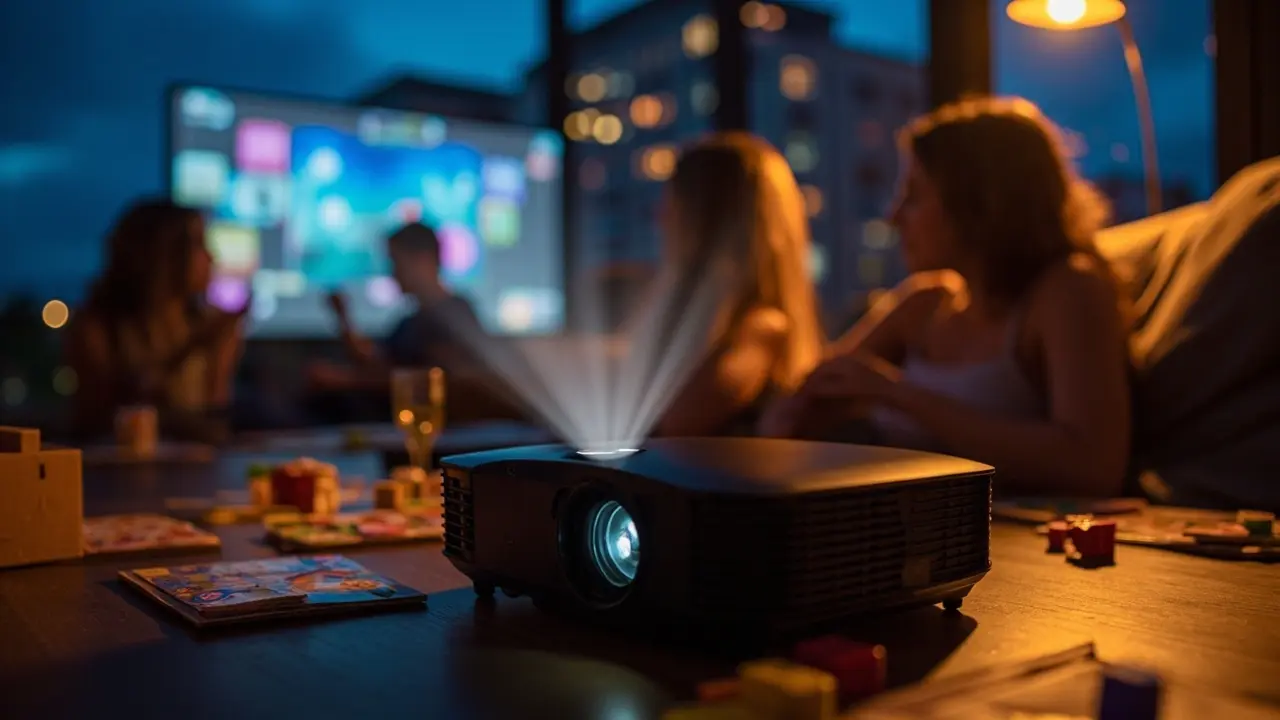
The Outdoor Portable Market in 2026
Market dynamics:
- Annual global volume: ~3–5 million units
- Growth rate: 15–25% YoY (fastest-growing projector segment)
- Key use cases: backyard movie nights (40%), camping (25%), travel (20%), business travel (10%), events (5%)
- Retail price points: $80–$150 entry, $200–$400 mid, $500+ premium
- Refresh cycle: 18–36 months (faster than TV/laptop categories)
- Brand leaders: Anker Nebula, XGIMI Halo, BenQ GV, Samsung Freestyle
Critical Specs for Outdoor Use

For outdoor and event-rental distributors, the GP99 Outdoor Cinema Smart Projector with 20W Loud Speakers is a battery-equipped reference design with 20W built-in speakers—drop-in for backyard cinema, camping, and pop-up event workflows.

For entry-level home cinema projects, the GP94A Android Smart Projector for Home Theater gives distributors an Android-native reference design—lightweight, low-heat, and easy to localize under private label.
Five specs make or break an outdoor portable projector:
1. Battery Life
- Minimum: 2 hours at full brightness (long enough for a movie)
- Recommended: 2.5–3.5 hours
- Premium: 4–6 hours
| Battery | Capacity | Runtime (eco mode) | Runtime (full) |
|---|---|---|---|
| 50 Wh | Small | 1.5 hr | 0.8 hr |
| 80 Wh | Standard | 2.5 hr | 1.5 hr |
| 120 Wh | Premium | 4 hr | 2.5 hr |
| 160 Wh | Ultra | 5.5 hr | 3.5 hr |
2. Brightness
- Minimum for evening use: 200 ANSI lumens
- Recommended for dusk: 400–600 ANSI
- For daytime outdoor use: 1,000+ ANSI (rare in portable form factor)
3. Durability
- Drop resistance: 1m onto hard surface (consumer expectation)
- Ingress protection: IP41 minimum (drip-proof), IP54+ ideal
- Operating temperature: 0°C to 35°C (consumer use range)
- Storage temperature: -10°C to 50°C
- Vibration: survive backpack transport
4. Connectivity
- WiFi: dual-band 2.4/5 GHz, WiFi 6 preferred
- Bluetooth: 5.0+ for speaker pairing, remote control
- HDMI: for laptop / streaming stick connection
- USB-C: for charging and display input (modern)
- USB-A: for media playback from flash drive
- 3.5mm audio: for external speakers
- AirPlay / Miracast / Chromecast: for wireless casting
5. Audio
- Built-in speakers: 2×5W minimum, 2×10W for outdoor use
- Bluetooth audio out: for connecting to portable speakers
- Dolby Audio / DTS: for premium audio positioning
The Spec Sweet Spot
For mid-tier outdoor portable ($250–$400 retail):
| Specification | Recommended Value |
|---|---|
| Brightness | 400–600 ANSI lumens |
| Resolution | Native 1080p |
| Light source | LED |
| Battery | 80–120 Wh (2.5–3.5 hr movie runtime) |
| Operating system | Android 11/12 with GMS (or AOSP) |
| Connectivity | WiFi 6, BT 5.0, HDMI, USB-C |
| Audio | 2×5W or 2×8W speakers |
| Weight | 1.5–3.0 kg |
| Throw ratio | 1.2:1 standard |
| Auto features | Auto-focus, auto-keystone |
| Special | Built-in carrying handle, kickstand |
OEM Cost Structure
For a mid-tier outdoor portable projector (1,000-unit order):
| Component | % of BOM |
|---|---|
| Optical engine | 22–28% |
| LED light source | 14–18% |
| SoC + WiFi/BT | 10–14% |
| Battery + power management | 10–14% |
| Housing (lightweight plastic) | 8–12% |
| Speakers + audio amp | 4–6% |
| PCBA + I/O | 6–10% |
| Cables + accessories | 2–4% |
| Assembly labor | 3–5% |
| Packaging | 3–5% |
| Total FOB | 100% |
| Typical FOB range | $58–$95 |
Battery: The Critical Component
Battery is the highest-risk component in outdoor portable projectors:
- Quality variance: Tier-1 cells (LG, Samsung SDI, CATL) vs. unbranded cells can mean 50% difference in cycle life
- Safety: Li-ion cells require UN38.3 certification for transport; substandard cells can fail
- Cycle life: 500 cycles minimum, 1,000+ for premium
- Operating temperature: -10°C to 45°C for the cells themselves
- Specify Tier-1 cell suppliers in your RFQ (CATL, BAK, Eve Energy, LG)
- Request cell UN38.3 test reports
- Specify battery protection circuit (BMS) requirements
- Confirm 500+ cycle warranty
Charging and Power
Outdoor projectors must support multiple charging methods:
| Method | Use Case | Speed |
|---|---|---|
| AC adapter (100–240V) | Indoor charging | 2–3 hr full charge |
| USB-C PD (PowerDelivery) | Modern fast charging | 1.5–2 hr full charge |
| Car charger (12V) | Camping / road trips | 2–3 hr full charge |
| Power bank (USB-C PD) | Off-grid | Variable (depends on bank capacity) |
| Solar panel (12V/18V DC) | Extended off-grid | 4–8 hr full charge |
Seasonal Demand
The outdoor portable market is highly seasonal:
| Quarter | Demand Level | Reasons |
|---|---|---|
| Q1 (Jan–Mar) | Low | Winter, indoor focus |
| Q2 (Apr–Jun) | Rising | Spring camping, outdoor prep |
| Q3 (Jul–Sep) | Peak | Summer camping, vacation |
| Q4 (Oct–Dec) | Moderate | Holiday gifts, indoor use |
Common Outdoor Portable OEM Mistakes
Five pitfalls:
- Cheap battery cells — field failures, customer returns, brand damage
- Insufficient brightness — 100 ANSI is unusable even at dusk
- Weak audio — quiet speakers outdoors, customer returns
- Heavy weight — consumers expect <3 kg; over 3.5 kg feels bulky
- Poor thermal management — heat + sealed battery = safety risk
Branding and Differentiation
How outdoor portable OEM brands differentiate:
Strategy 1: Visual Design
Rugged look (rubberized corners, military-inspired), color options (forest green, desert tan, charcoal), premium materials (anodized aluminum). Custom tooling: $30,000–$80,000.
Strategy 2: Battery Performance
Larger battery (160 Wh+), fast charging (USB-C PD 65W+), power bank functionality (use projector to charge phone). BOM adder: $15–$25.
Strategy 3: Smart Features
Auto-obstacle avoidance, screen fit, gesture control, voice assistant with far-field microphones. Software investment: $10,000–$30,000.
Strategy 4: Audio
Premium audio (Harman Kardon, JBL, Bose co-branding), Dolby Atmos simulation, larger drivers. Royalty + BOM adder: $15–$40.
Strategy 5: Accessories
Bundled carrying case, tripod, portable screen, external battery. Bundled SKUs command higher retail prices.
What We Recommend for Outdoor Portable OEM Buyers
- Target $250–$400 retail price band with 400–600 ANSI and 80–120 Wh battery
- Specify Tier-1 battery cells with UN38.3 certification
- USB-C PD charging at 45W+ for modern compatibility
- IP41+ ingress protection for splash resistance
- Plan for seasonal production ramp Q1–Q2 for Q3 peak
- Bundle accessories (carrying case, tripod) to lift retail price
Conclusion and Next Step
Outdoor portable projector OEM is a high-growth, fast-refresh segment with strong consumer demand. Win on battery quality, brightness, audio, and durability. Plan for seasonal production and bundle accessories to differentiate.
💼 Ready to launch an outdoor portable projector?
Request a Free Quote | View Product Catalog
We ship outdoor portable projectors with Tier-1 battery cells, 1080p resolution, and IP41+ protection. Engineering team will recommend the right configuration for your target retail price within 24 hours.
