
Posted At: Apr 07, 2026 - 72 Views
Projector Compliance and Import in Australia: A 2026 Guide
A shipment of 200 laser projectors lands at Port Botany, and customs holds the entire pallet because the supplier forgot one piece of paperwork. The buyer has already paid 60 percent upfront, the retail launch is in nine days, and now the goods sit under bond while demurrage fees tick up at roughly 180 Australian dollars per pallet per day. This is the single most expensive mistake a B2B procurement team can make when handling the unit, and it is almost always preventable.
This guide walks you through every checkpoint that matters for this projector in 2026, from the ACMA radiofrequency declaration to the Australian Standard AS/NZS safety mark, from RCM labelling to the documentary chain that customs brokers actually inspect. Whether you are a wholesaler importing from a Shenzhen OEM, a brand owner validating a new SKU, or an Australian distributor preparing a 2026 product roadmap, the framework below will help you ship compliant hardware without surprise detention at the border.
Related resources: ISO 9001 quality system guide · FCC certification guide
TL;DR
- the projector in 2026 is governed by three overlapping frameworks: the ACMA telecommunications and EMC regime, the EESS electrical safety regime under AS/NZS standards, and the ACCC mandatory consumer guarantee plus labelling rules.
- Every projector entering Australia must carry the Regulatory Compliance Mark (RCM) before customs release; missing or misapplied RCM is the top reason shipments are held.
- Document folders for the SKU typically run 11 to 14 items per SKU, including a Declaration of Conformity, test reports from an accredited lab, and a Customs import declaration with correct tariff classification under HS 8528.
- Lead time from purchase order to compliant delivery averages 10 to 14 weeks for B2B orders, and 70 percent of that window is documentation, not manufacturing.
- Buyers who treat the model as a checklist at the end of the project lose money; buyers who build it into the supplier RFQ save both demurrage and rework.
the unit: The 2026 Regulatory Stack
For B2B procurement teams evaluating new OEM partners, this projector is not a single certificate. It is a stack of overlapping federal and state obligations, each enforced by a different agency, each with its own test report, and each tied to a specific model variant. We will walk through the stack in the order customs actually inspects it.
The ACMA Layer: EMC, RF, and the RCM Mark
The Australian Communications and Media Authority controls everything that radiates or receives a signal. For a modern smart projector, that covers Wi-Fi modules, Bluetooth remote controls, and any HDMI-CEC return-channel behaviour. The governing standard is AS/NZS CISPR 32 for electromagnetic emissions, and the wireless portion sits under AS/NZS 4268 for radio devices. The supplier must hold an accredited test report from an ILAC-MRA signatory lab, then file a Declaration of Conformity and register the model on the ACMA national database before the RCM mark can be legally applied to the product, packaging, and user manual.
A practical B2B footnote: we have seen RCM marks applied to units where the Wi-Fi module was swapped mid-production without re-testing. From an ACMA perspective, that is a non-compliant variant of an approved model, and the importer, not the OEM, is the party of record on the database. Build a clause into your purchase contract that obligates the factory to notify you of any BOM change that touches the radio chipset.
For reference, the ACMA publishes its supplier registration and labelling requirements on its official site, and the framework is mirrored in the Australian Government's Mutual Recognition arrangements with New Zealand under the Trans-Tasman Mutual Recognition Agreement ACMA.
The EESS Layer: Electrical Safety under AS/NZS 62368-1
Once EMC is cleared, electrical safety is the next gate. Australia operates the Electrical Equipment Safety Scheme (EESS) nationally, and AS/NZS 62368-1 is the harmonised standard for audio-visual and information technology equipment, which directly covers projectors. The supplier must hold a Certificate of Suitability issued by an EESS accredited certifier such as EESS Conformity Certification, SAA Approvals, or Global Mark. For B2B buyers, the proof artifact is the certificate number plus the certificate's valid date range, both of which customs brokers verify against the EESS public register.
We require every DataMax customer shipment leaving our Shenzhen line to carry a fresh AS/NZS 62368-1 test report dated within 12 months of the production batch. Anything older triggers a re-test that costs roughly 1,200 to 1,800 Australian dollars per SKU and adds three to four weeks to the timeline. For OEM buyers evaluating a new vendor, ask to see the certifier name, the certificate number, and the report date before issuing the deposit; a vendor who cannot produce those three items on a single PDF is signalling a real risk for the projector downstream.
HS Classification, GST, and the Documentary Chain
The third layer is customs brokerage. Projectors enter Australia under HS 8528.42.00 for monochrome DLP or HS 8528.72.00 for colour-capable units. Misclassification is one of the fastest ways to trigger a tariff dispute, and the difference between a 0 percent and a 5 percent duty rate is material on a 200-unit pallet. On top of duty, the importer of record must be registered for Australian GST and lodge a customs import declaration through the Integrated Cargo System, including the Commercial Invoice, Packing List, Bill of Lading, Certificate of Origin if claiming FTA preference, and the RCM plus EESS evidence referenced above.
A standard folder for the SKU therefore looks like this: Commercial Invoice, Packing List, Bill of Lading or Air Waybill, RCM evidence pack, EESS certificate, DoC for AS/NZS CISPR 32, DoC for AS/NZS 4268 if Wi-Fi equipped, AS/NZS 62368-1 test report, HS classification worksheet, FTA Certificate of Origin if applicable, and the Importer Declaration to customs. That is 11 to 14 documents per SKU, and brokers routinely reject shipments missing even one.
For B2B procurement teams, the practical takeaway on the model is simple: lock the documentary chain in the RFQ, not in the freight forwarder's inbox the week before vessel departure.
H2 — Labelling, Markings, and the RCM Evidence Pack
For the unit, the documentation behind the shipment is only half the story; the physical product itself must carry the correct markings when it lands at the Australian border. The RCM (Regulatory Compliance Mark) is the single visual proof that the supplier attests the unit meets both ACMA electromagnetic compatibility rules and EESS electrical safety rules. For a projector, the RCM must be permanently affixed to the external enclosure, typically on the rear label plate next to the model number, batch identifier, and electrical ratings. A removable sticker is not acceptable; customs and state-level electrical safety inspectors will physically remove sample units and verify the mark depth, position, and labelling under AS/NZS 3820.
Below is the minimum evidence pack we prepare for every DataMax customer shipment heading to Australia. Think of this as the procurement checklist a B2B buyer's compliance officer should request from any prospective supplier.
| Document / Artefact | Purpose | Issued By | Validity |
|---|---|---|---|
| RCM Mark photo (rear label) | Visual proof of compliance | DataMax factory | Permanent |
| Supplier Code (ACMA) | Wireless/Radio supplier registration | ACMA registered | Annual renewal |
| SDoC for AS/NZS CISPR 32 | EMC attestation | DataMax | Per batch |
| SDoC for AS/NZS 4268 | Radio attestation (if Wi-Fi/BT) | DataMax | Per batch |
| AS/NZS 62368-1 Test Report | Electrical safety | EESS accredited lab | 12 months |
| Certificate of Suitability | EESS evidence | EESS accredited certifier | 3 years typical |
We have seen shipments rejected in Sydney and Melbourne because the rear label had the RCM printed on a paper sticker rather than moulded into the plastic, so this is one of those details that looks cosmetic but is non-negotiable for this projector.
Permanent vs. Adhesive RCM Marks
Moulded-in or laser-etched RCM marks survive warehouse handling, retail unboxing, and field service. Adhesive RCM labels often peel under tropical humidity during container transit, and a peeling RCM is treated by Australian state inspectors as an unmarked unit. For OEM buyers, the right move at the tooling stage is to specify moulded RCM in the design-for-manufacture pack rather than discover the issue after tooling is amortised across 5,000 units.
H2 — Lead Time, MOQ, and Cost Stack for Compliant Builds

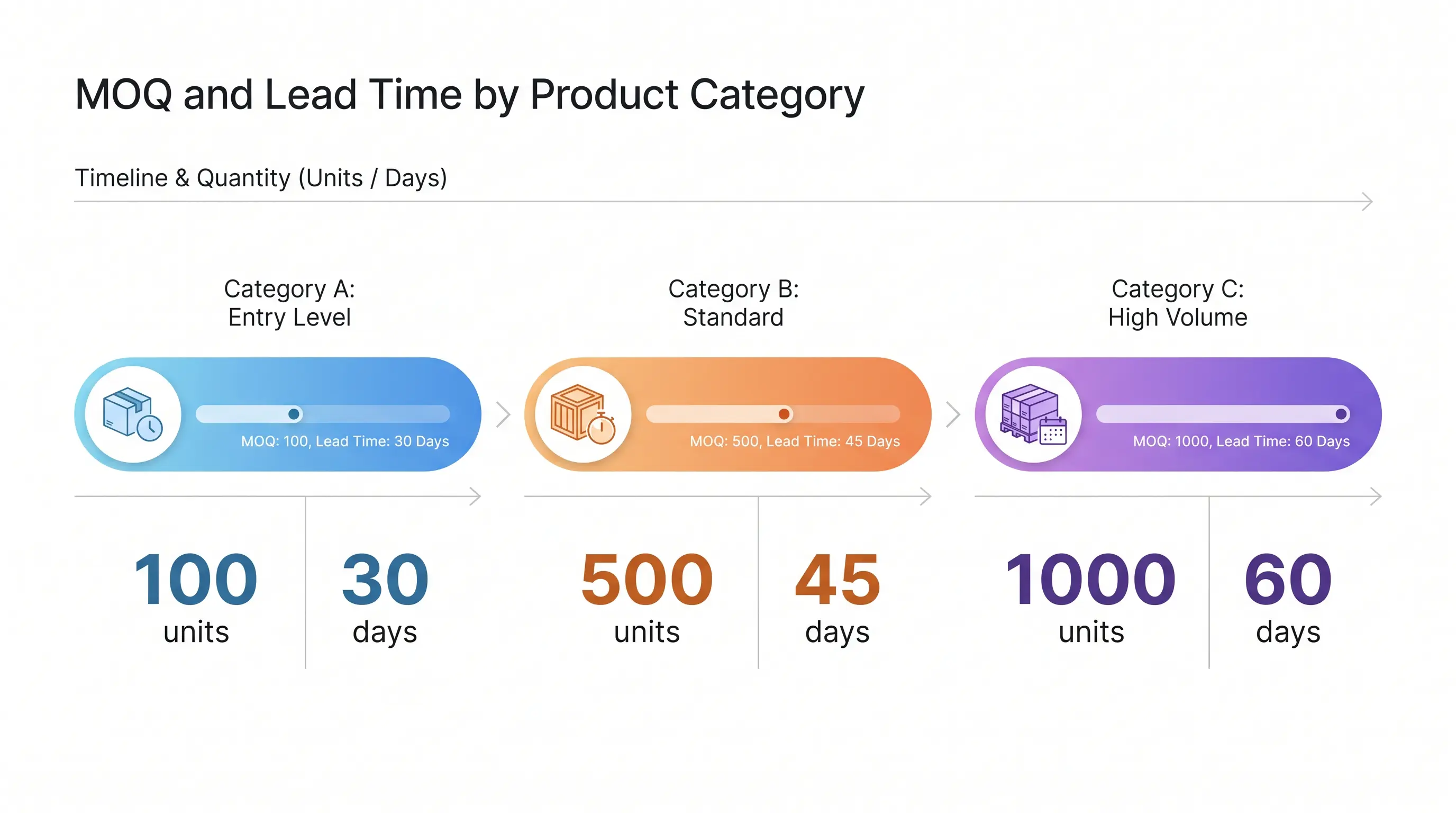
The economics of the projector swing heavily on three levers: minimum order quantity, certification amortisation, and freight mode. For B2B procurement teams mapping a 2026 RFQ, the realistic numbers we quote from our Shenzhen production line are roughly as follows.
| Lever | Entry Tier | Mid Tier | Bulk Tier |
|---|---|---|---|
| MOQ (units per SKU) | 200 | 500 | 1,000+ |
| Lead time after PO | 6 weeks | 8 weeks | 12 weeks |
| Per-unit tooling amortisation | High | Medium | Negligible |
| Certification cost per SKU | AUD 1,500-2,200 | AUD 1,200-1,800 | AUD 800-1,200 |
| Sea freight (Sydney, 40HQ) | ~AUD 4,800 | ~AUD 4,200 | ~AUD 3,600 |
Certification cost is the variable that most procurement teams underestimate. Each new SKU needs a fresh AS/NZS 62368-1 test slot, and accredited labs in Shenzhen and Hong Kong currently charge between 1,200 and 2,200 Australian dollars depending on whether the unit is a single-chip DLP, laser phosphor display, or LCD variant. Spread across 200 units that is a real landed cost line; spread across 1,000 units it becomes background noise. The right RFQ strategy for the SKU is therefore to standardise on as few SKUs as possible, or to lock certification across a model family so the lab report covers a 4K UHD flagship, a 1080p mid-range, and a portable unit under one Certificate of Suitability.
Freight Mode and Its Compliance Implications
Air freight collapses transit time to 4 to 6 days but raises the unit landed cost by roughly 18 to 25 percent. Sea freight remains the default for the unit because the 23 to 28 day transit window aligns with the 12-month validity on electrical safety reports. One subtle point for OEM buyers: lithium-ion battery-bearing projectors or remote controls are classified as Class 9 dangerous goods under the IATA DGR, and air freight requires a separate Shipper's Declaration. DataMax flags this in the commercial invoice automatically; many smaller factories do not, and the resulting freight hold can wipe out the air-time advantage overnight.
Incoterms and Where Compliance Risk Transfers
Under FOB Shenzhen, the buyer inherits this projector risk the moment the goods pass the ship rail. Under DDP Sydney, the seller absorbs that risk, but a vendor quoting DDP without holding a current ACMA supplier code and a live EESS certificate is pricing on hope. For B2B procurement teams we recommend EXW or FCA paired with a nominated Australian broker; the cost split is transparent and the broker's compliance gates become a forcing function on the supplier's paperwork discipline.
H2 — Common Rejection Points at the Border
Even with a complete evidence pack, certain patterns repeat at the Australian border for the projector, and B2B procurement teams should pre-empt each one before the vessel departs.
The first repeat offender is stale EESS certificates. Customs brokers query the EESS public register on a percentage of shipments, and a certificate dated more than 12 months before the production batch is treated as advisory only. The second is missing Supplier Code on the RCM label; new vendors occasionally print RCM without the ACMA supplier number, which is a documentary defect under the Telecommunications Act. The third is HS code mismatch, where the importer codes a colour projector under HS 8528.42.00 (monochrome) and pays the wrong duty.
What Triggers a Full Hold vs. a Documentary Query
A documentary query is resolved in 24 to 72 hours by emailing the missing PDF. A full hold involves the Australian Border Force detaining the container at the bonded warehouse, and demurrage starts at roughly AUD 220 per day for a 40-foot container. The fastest way to clear a hold is to have the certificate number, the EESS certifier name, and the supplier code all instantly accessible; we keep those three items on the packing list header so the broker can paste them straight into the cargo system without opening the carton.
Post-Landing Compliance Surveillance
Compliance does not stop at the gate. The Australian Competition and Consumer Commission runs the National Equipment Energy Efficiency Program, which scopes projectors for standby power limits under AS/NZS 62087, and state electrical safety offices conduct random retail sampling. A B2B buyer sourcing projector compliance and import in australia in 2026 should expect at least one in twenty retail-channel SKUs to be pulled for verification, and the evidence pack must remain on file for five years from the import declaration date.
H2 — Choosing a Compliant Projector Partner for Australia
For B2B procurement teams finalising projector compliance and import in australia in 2026, the supplier shortlist matters as much as the spec sheet. We recommend grading every potential vendor against four checkpoints before issuing the purchase order.
The first checkpoint is evidence, not marketing. Ask the factory for a current EESS certificate number, the ACMA supplier code, and a sample RCM label photograph. A vendor that produces these within 24 hours has done this before; a vendor that asks "what is RCM?" has not. The second checkpoint is a documented factory audit, ideally ISO 9001 plus a recent social-compliance audit such as SMETA or BSCI. The third checkpoint is the sample policy: serious OEM partners offer a paid sample at MOQ pricing with a 7 to 14-day dispatch window, and credit the sample fee against the first production order. The fourth checkpoint is lead-time transparency, written into the proforma invoice rather than quoted verbally. For projector compliance and import in australia in 2026, a realistic OEM cycle is 25 to 35 days for production plus 18 to 24 days ocean freight to Sydney or Melbourne, totalling roughly 6 to 8 weeks door-to-door for a 500-unit run.
DataMax Engagement Path for Australia Buyers
Our standard engagement for projector compliance and import in australia starts with a 30-minute scoping call where we map your target use case (education, hotel, retail signage, boardroom) to a candidate model from our 4K UHD, laser phosphor, and ultra-short throw ranges. From there, MOQ starts at 200 units for branded OEM builds and 500 units for fully custom ODM programmes, with sample dispatch in 7 to 10 working days from our Shenzhen line. Compliance documentation is bundled into the shipment pack: EESS certificate copy, ACMA supplier code declaration, RCM label artwork, AS/NZS 62087 standby report, and the commercial invoice with HS 8528.62.00 pre-coded.
- Initial contact: request a custom quote
- Product reference: GP95 hotel projector
- Specification source: ACMA supplier code database and EESS public register
Frequently Asked Questions
What does projector compliance and import in australia actually require in 2026?
Three layers: ACMA RCM labelling under the Telecommunications Act, an EESS electrical safety certificate for any mains-powered unit, and an AS/NZS 62087 standby-power report lodged with the National Equipment Energy Efficiency Program. Customs brokers at the border will query any of the three on a random-percentage basis, so the evidence pack should contain all three PDFs before the vessel departs.
How long does projector compliance and import in australia certification take for a new OEM model?
Realistic timeline is 6 to 10 weeks from sample submission to EESS certificate issue, plus a further 2 weeks for RCM label artwork approval. We build this into the production calendar at PO confirmation rather than after tooling, which keeps the launch window on track for projector compliance and import in australia buyers targeting Q3 2026 retail windows.
Can a B2B buyer self-declare RCM instead of using an ACMA-registered supplier?
No. The RCM mark can only be applied by a supplier recorded on the ACMA supplier code database, and self-declaration by an overseas factory is not accepted under the current Telecommunications Labelling Notice. For projector compliance and import in australia, the importer of record carries the penalty even if the label was applied overseas.
What HS code should be used for a 4K laser projector shipped to Australia?
The correct code for most modern colour projectors is HS 8528.62.00, which carries a 0% duty under the China-Australia Free Trade Agreement when a valid Certificate of Origin is attached. Mis-coding as 8528.42.00 (monochrome) or 8528.72.00 (consumer TV) triggers a duty reassessment and a documentary query that adds 3 to 5 working days.
How much does projector compliance and import in australia testing cost per SKU?
For a standard 1080p or 4K UHD laser model, third-party EESS testing plus AS/NZS 62087 standby reporting lands between AUD 1,800 and AUD 3,400 per SKU depending on lab turnaround. Volume buyers running 5 or more SKUs through the same lab typically negotiate 15 to 20% off list, which we pass through as part of the projector compliance and import in australia service bundle.
What happens if a shipment arrives without proper projector compliance and import in australia paperwork?
Australian Border Force will detain the container at the bonded warehouse, demurrage starts at roughly AUD 220 per day for a 40-foot unit, and the importer has 30 days to produce compliant documentation or re-export. Repeat offences lead to compliance audits under the Project Remediate programme.
Final Takeaway
The market for compliant projection hardware into Australia has matured; the buyers winning shelf space in 2026 are the ones whose evidence packs were assembled before the bill of lading was issued, not after.
Closing
Choosing a projector partner for the Australian market is ultimately a paperwork discipline problem wearing a hardware costume. DataMax ships every order with the EESS, RCM, and standby-power evidence bundled into the packing list, so your broker clears the gate on the first query. Ready to scope a build? Send us your target spec, quantity, and launch window, and we will return a fixed-price quote with the compliance timeline baked in.
